Kosovo as Your Launchpad: The Strategic Case for Making Pristina the Center of Your European Journey
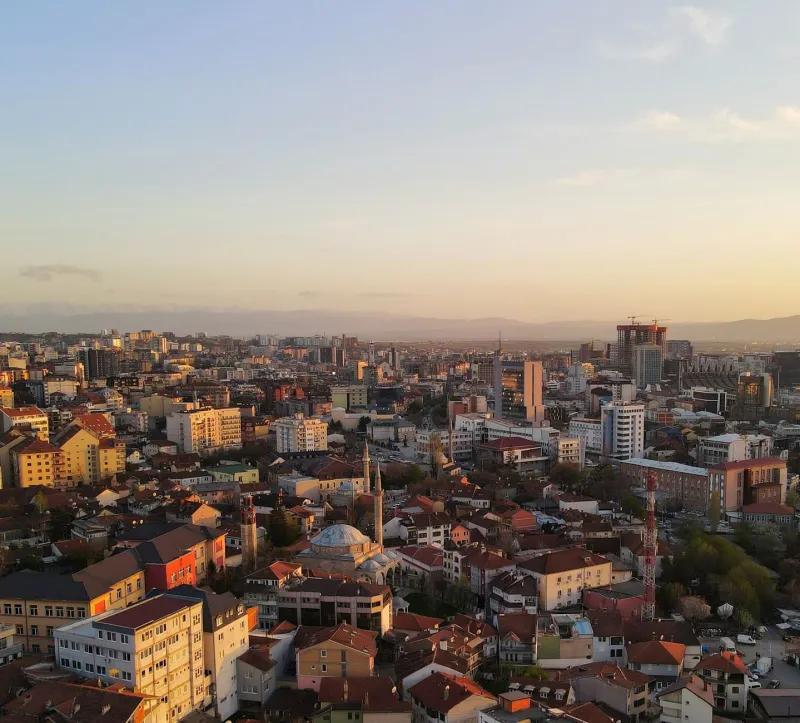
Most American travelers arrive in Europe with a fixed mental map. London, Paris, Rome—the usual anchors. The Balkans, if they appear at all, tend to occupy a vague afterthought at the edge of the itinerary. But a growing number of independent travelers are discovering something the guidebooks haven't fully caught up with: Kosovo, sitting at the geographic and cultural heart of the western Balkans, may be the most strategically intelligent place to anchor an entire regional journey.
The reasons are practical, compelling, and surprisingly easy to act on.
The Geography Makes the Argument
Spread a map of southeastern Europe on a table and place your finger on Pristina. Within a radius that a determined driver can cover in under four hours, you'll find the capitals of six distinct countries: Tirana to the southwest, Skopje to the south, Belgrade to the north, Sarajevo to the northwest, Podgorica to the west, and Sofia reachable with a slightly longer push to the east. No other city in the region offers that kind of radial access.
For American travelers who think in terms of road trips—who are comfortable with the idea of covering significant ground between meaningful stops—this geography feels intuitive. The Balkans, at their widest, are roughly the size of Texas. Kosovo sits closer to the center of that space than most people realize, and the road infrastructure connecting it to neighboring capitals has improved substantially over the past decade.
Pristina's international airport, Adem Jashari International, operates direct or one-stop connections to major European hubs including Vienna, Zurich, Istanbul, Frankfurt, and London. Getting into Kosovo from the United States is straightforward, and getting out—or returning after a regional loop—is equally manageable.
What the Visa Landscape Actually Means for American Travelers
American passport holders enter Kosovo visa-free for stays of up to 90 days, a baseline that requires no advance paperwork and no consulate appointment. That alone is unremarkable; the United States enjoys similar arrangements with most of Europe. What makes Kosovo's position distinctive is the regional context.
Kosovo has progressively expanded its own visa-free arrangements with neighboring Balkan states and a growing list of countries worldwide, now exceeding 90 agreements. For travelers building circular itineraries—entering Kosovo, looping through two or three neighboring countries, and returning to Pristina before flying home—this matters in concrete ways. Re-entry is seamless. There's no need to recalibrate visa status or reset a countdown clock with each border crossing, provided you're managing your Schengen days thoughtfully on the European side of the equation.
A brief note worth understanding: Kosovo is not part of the Schengen Area, which means time spent in Kosovo does not count against your 90-day Schengen allowance. For American travelers planning extended European journeys, this is a meaningful structural advantage. Kosovo can function as a strategic pause—a place to spend two weeks exploring without drawing down the Schengen clock—before continuing into EU territory.
Border Crossings: What to Expect
Crossing from Kosovo into neighboring countries is, for the most part, a routine experience. The border with North Macedonia at Blace or Globočica is among the most frequently used and generally moves efficiently. The crossing into Albania at Morina or Qafë Botë is similarly well-traveled and straightforward for American passport holders.
The Serbia crossing requires a different kind of preparation. The political relationship between Kosovo and Serbia remains unresolved at the diplomatic level, and the practical implications for travelers deserve honest acknowledgment. Americans entering Kosovo directly from Serbia via a Kosovo-controlled crossing are generally admitted without issue. However, travelers who enter Serbia first and then attempt to cross into Kosovo through a Serbian-controlled point may encounter complications. The standard advice from experienced regional travelers: enter Kosovo first, then visit Serbia, rather than the reverse. Consulting current State Department travel advisories before finalizing your routing is always a prudent step.
Crossings into Montenegro and Bosnia and Herzegovina are less frequently used by tourists but entirely viable for those building more ambitious itineraries through the western Balkans.
Building the Itinerary: A Framework
The beauty of Kosovo as a hub is that it rewards different styles of travel. Here are three frameworks that American visitors have used successfully:
The Balkan Loop. Fly into Pristina, spend four to five days exploring Kosovo—Prizren's Ottoman old town, the Rugova Canyon, the medieval monasteries of the Patriarchate of Peć. Then drive south to Skopje for two days, cross into Albania for a few days in Tirana and the Albanian Riviera, and return north through Gjakova. Total driving: manageable. Variety: exceptional.
The Capital Circuit. Use Pristina as a fixed base and take day trips or two-night excursions to neighboring capitals. Skopje is roughly ninety minutes away. Tirana is under three hours. This approach suits travelers who prefer a stable home base—a single hotel, a familiar café, a neighborhood that starts to feel like theirs—while still accumulating a genuinely diverse regional experience.
The Extended Slow Journey. Arrive in Pristina, spend the first two weeks in Kosovo proper, then move west into Albania before looping through Montenegro and returning via Kosovo for a final few days before departure. The Kosovo bookends provide structural coherence to what might otherwise feel like a disconnected series of stops.
The Cost Dimension
Kosovo consistently ranks among the most affordable countries in Europe by standard travel metrics. Accommodation, food, local transportation, and guided experiences all come in substantially below what American travelers pay in Western Europe—and noticeably below what they pay in Croatia, Slovenia, or even neighboring Serbia. For travelers who want to extend their total time in the region without extending their total budget, anchoring in Kosovo and treating it as a financial reset between more expensive stops is a genuinely practical strategy.
Pristina in particular has seen a rapid expansion of quality accommodation options in recent years, from well-positioned boutique hotels to longer-stay apartments suited to travelers who plan to spend a week or more in the city before heading out on regional excursions.
An Invitation to Think Differently
The most common feedback from American travelers who have used Kosovo as a regional hub is a version of the same sentiment: I didn't expect it to work this well. The combination of central geography, manageable border logistics, strong pro-American sentiment in the local population, affordable infrastructure, and a surprisingly vibrant urban culture in Pristina creates a travel environment that rewards the traveler willing to look past the conventional European itinerary.
The Balkans are not a detour from Europe. They are, in many ways, the part of Europe where the continent's history is most legible, most layered, and most alive. And Kosovo—small, strategically placed, and genuinely welcoming—may be the best door through which to enter that world.
Plan your journey at visitkosova.org.