Beyond the Headlines: How Kosovo's Museums Are Telling Stories America Has Never Heard
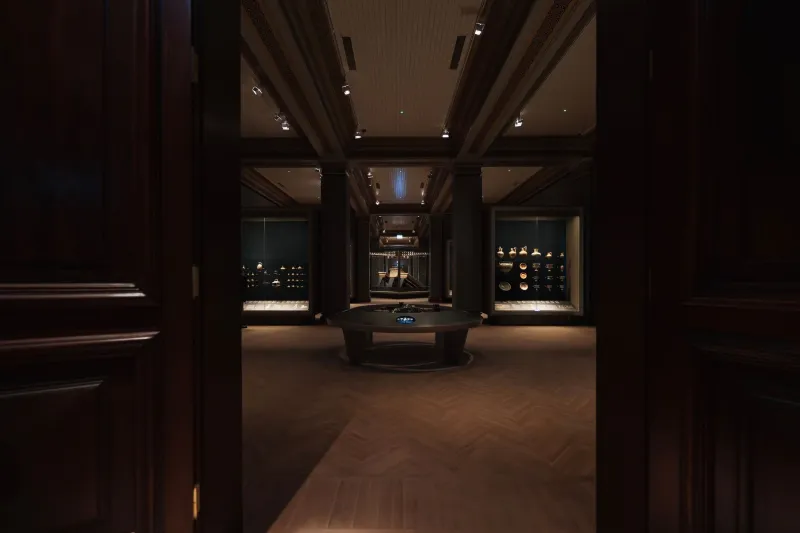
For most Americans, knowledge of Kosovo arrives pre-packaged: a NATO intervention, a declaration of independence, a name attached to a distant crisis. It is the kind of knowledge that feels sufficient until you are standing inside the Kosovo Museum in Pristina, staring at a Bronze Age vessel that predates every conflict you were ever taught to associate with this place by several thousand years.
That gap — between what visitors expect and what they actually encounter — is precisely what makes Kosovo's museum landscape one of the most compelling and underappreciated reasons to visit the country. These institutions are not simply repositories of artifacts. They are active arguments, made in glass cases and exhibition halls, about who Kosovo's people are, where they come from, and what their presence on this land actually means.
The Kosovo Museum: Older Than the Argument
The Kosovo Museum, located in central Pristina in a building that has itself witnessed considerable history, anchors the country's institutional cultural life. Its permanent archaeological collection stretches back through the Neolithic, Bronze Age, and Iron Age periods, presenting a portrait of continuous human habitation in this territory that long precedes any of the political narratives that dominate Western understanding of the region.
For American visitors, the effect can be quietly disorienting — in the best possible sense. The Balkans, as received through U.S. media, tends to begin somewhere around the dissolution of Yugoslavia. Walking through rooms dedicated to prehistoric settlements and Roman-era artifacts resets that timeline dramatically. The message, delivered without polemic, is simply that this place has always been inhabited, always been complex, and always been home.
Curators at the museum note that American visitors frequently express surprise at the depth of the archaeological holdings. "People come in expecting something about the 1990s," one staff member observed during a recent visit. "They leave thinking about the Neolithic. That shift — that's what we're here for."
Ethnography as Resistance: The Living Culture Galleries
Beyond archaeology, Kosovo's museums have invested significantly in ethnographic collections that document the material culture of everyday life — the textiles, tools, musical instruments, and domestic objects that constitute the texture of Albanian life across centuries. These galleries tend to receive less international attention than the conflict-focused exhibitions, but they may be the most important rooms in the building for visitors genuinely trying to understand the country.
Traditional dress, regional craft traditions, and folk objects are presented not as museum curiosities but as evidence of a living cultural inheritance — one that survived Ottoman rule, Serbian administration, and the devastation of the late 1990s. The curatorial logic is transparent and compelling: to document everyday culture is to insist on the full humanity of the people who produced it.
For American travelers with a background in civil rights history or Indigenous cultural preservation, these galleries may resonate in unexpected ways. The project of using institutional space to assert cultural legitimacy is not unique to Kosovo, but the stakes here feel immediate and unresolved in ways that give the exhibitions a particular urgency.
Regional Museums: Where the Story Gets Personal
Pristina's institutions, significant as they are, represent only one dimension of Kosovo's museum landscape. Across the country, smaller regional collections offer encounters with history that feel more intimate and, in some cases, more emotionally immediate.
In Prizren, the country's cultural capital and one of its most beautiful cities, local museums and heritage sites document the layered Ottoman, Albanian, and Serbian influences that have shaped the city over centuries. The Prizren League Museum commemorates the 1878 Albanian political movement that represents one of the founding moments of modern Albanian national consciousness — a chapter of history almost entirely absent from standard American curricula but essential to understanding the region.
In Gjilan and Peja, regional collections preserve local histories that resist easy summarization, presenting the complexity of Kosovo's various communities with a granularity that national narratives sometimes flatten. These are institutions worth seeking out precisely because they complicate the picture, adding texture and nuance to stories that tend to lose both in translation.
The Memorial Houses: History at Human Scale
Perhaps the most distinctive feature of Kosovo's heritage landscape is its tradition of memorial houses — preserved historic residences that function as museums of domestic life and, in some cases, of political and cultural significance. The Emin Gjiku Complex in Pristina, a beautifully maintained ensemble of traditional Albanian houses, offers visitors an unusually direct encounter with the architecture and rhythms of pre-modern urban life.
These spaces operate at a scale that large national museums cannot replicate. Rooms are small, objects are close, and the imaginative distance between visitor and history collapses in ways that can be genuinely affecting. American visitors accustomed to the monumental scale of institutions like the Smithsonian often find the memorial house format unexpectedly powerful precisely because of its intimacy.
What American Visitors Consistently Get Wrong — and Right
Curators and guides across Kosovo's museum sector describe a consistent pattern in American visitors: initial surprise at the sophistication and depth of the collections, followed by genuine engagement, followed by a kind of productive discomfort as assumptions are quietly revised.
The discomfort, most museum professionals emphasize, is welcome. Kosovo's institutions are not designed to comfort visitors or to confirm preexisting narratives. They are designed to present evidence and allow visitors to draw their own conclusions. In an era when cultural institutions worldwide are grappling with questions of representation, voice, and contested history, Kosovo's museums are doing this work with notable seriousness and relatively little international recognition.
What American visitors tend to get right, according to those who work in these spaces, is a genuine openness to being surprised. "Americans ask good questions," noted one guide at a Pristina heritage site. "They're not always sure what they're looking at, but they want to understand it. That's the right starting point."
Planning Your Museum Visit
For travelers building an itinerary around Kosovo's cultural institutions, a few practical notes are worth keeping in mind. The Kosovo Museum in Pristina is the logical starting point, offering the broadest overview of the country's archaeological and ethnographic heritage. Allow at least two to three hours, and consider engaging a guide who can provide context that exhibition labels alone may not fully convey.
Prizren warrants at minimum a full day, combining museum visits with the city's exceptional architectural heritage. The Prizren League Museum is essential; the surrounding old town provides living context for everything inside it.
For travelers with particular interests in recent history, Kosovo's memorial sites and documentation centers offer carefully curated encounters with the events of the 1990s — presented with a seriousness and care that stands in marked contrast to the sensationalism that often characterized international coverage of that period.
Entrance fees at most institutions are modest by American standards, and English-language materials are increasingly available. The investment of time, however, is the real currency. Kosovo's museums reward patience, curiosity, and a willingness to let the country tell its own story — which, it turns out, is considerably longer, richer, and more surprising than the headlines ever suggested.