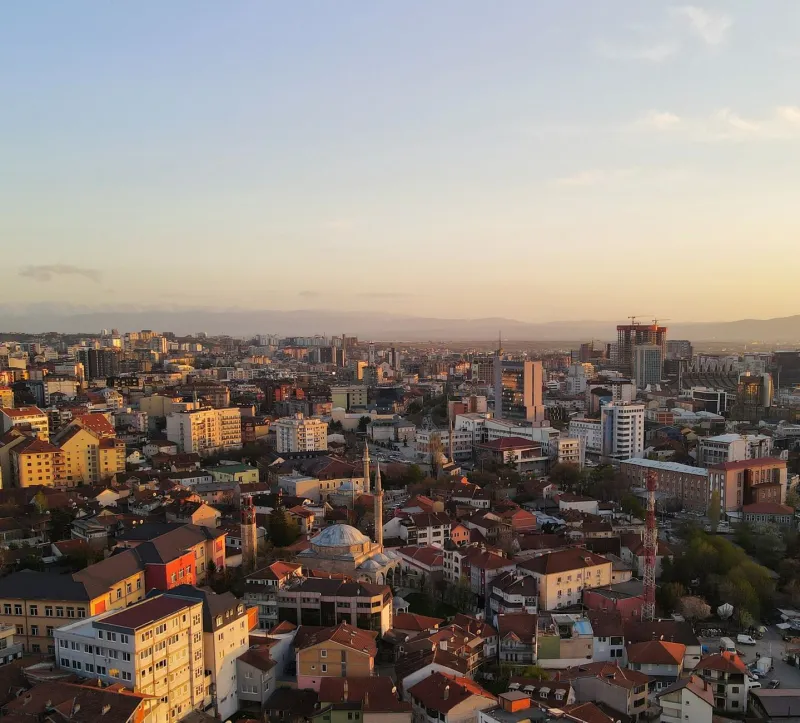
Rethinking the Balkan Route: How Kosovo's Expanding Travel Access Is Rewiring American Itineraries
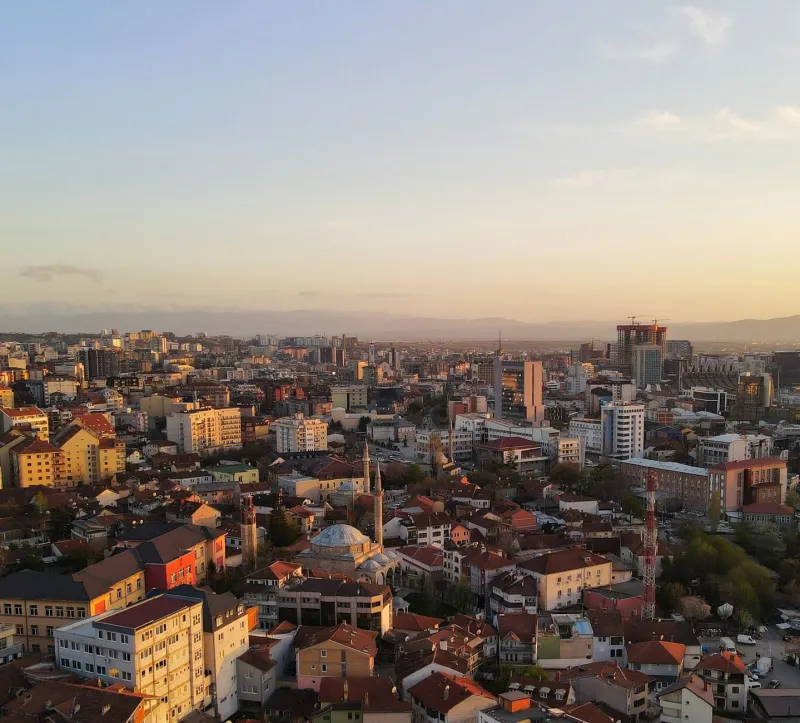
For decades, American travelers planning a Balkan journey defaulted to the same well-worn sequence: fly into Zagreb or Belgrade, trace the coast through Dubrovnik, and circle back through Sarajevo if time permitted. Kosovo, if it appeared on the itinerary at all, was an afterthought — a country many Americans couldn't confidently locate on a map. That calculus is changing, and the reasons are more practical than romantic.
Kosovo's evolving position in regional travel is no longer simply a matter of cultural curiosity or budget appeal. Increasingly, it is a matter of access — and for American passport holders, the access on offer is more advantageous than most travelers realize.
What American Travelers Actually Need to Know
United States citizens do not require a visa to enter Kosovo. Entry is straightforward, with most travelers receiving a stamp at Pristina's Adem Jashari International Airport or at land border crossings without advance paperwork or fees. This alone distinguishes Kosovo from several neighboring countries that impose entry requirements, registration obligations, or fee structures that add administrative weight to a trip.
Beyond Kosovo's own entry policy, the country's geographic position matters enormously. Kosovo shares land borders with North Macedonia, Albania, Montenegro, and Serbia — four distinct travel environments, each with its own entry rules, currency considerations, and tourism character. For an American building a multi-country Balkan itinerary, Kosovo functions less like a single destination and more like a master key.
Albania and North Macedonia both maintain visa-free access for American citizens, meaning a traveler based in Pristina can reach Tirana in under three hours or cross into Skopje in roughly the same time — no visa queues, no consulate appointments, no advance planning beyond a packed bag. Montenegro, a country whose Adriatic coastline draws increasing American interest, is similarly accessible without a visa. The practical result is that a traveler who positions Kosovo at the center of their itinerary can move fluidly through four countries on a single trip, using Pristina as a home base while making strategic day trips or multi-night excursions in every direction.
The Cost Equation
Travel math in the Balkans is rarely straightforward, but Kosovo consistently surprises American visitors who arrive expecting prices calibrated to European norms. Accommodation, meals, local transportation, and guided experiences in Kosovo run meaningfully below the cost of comparable offerings in Croatia, Slovenia, or even Bosnia-Herzegovina's most visited towns. This is not a matter of diminished quality — Pristina's hospitality infrastructure has matured considerably over the past decade — but rather a reflection of Kosovo's position outside the euro zone and its relatively modest tourism volume.
For a traveler using Kosovo as a hub, the savings compound. Cheaper base accommodation means a larger budget for day excursions. Lower food costs in Pristina offset the occasional splurge in Tirana or Kotor. And because Kosovo's guesthouses and boutique hotels cater to visitors who are genuinely interested in the country rather than passing through on a package tour, the level of personalized attention and local knowledge available to guests frequently exceeds what travelers encounter in more commercially developed destinations.
Flights into Pristina have also diversified. While Adem Jashari International Airport does not yet rival Belgrade or Tirana in terms of direct transatlantic connections, a growing number of European hub connections — through Vienna, Istanbul, Zurich, and London — make routing through Pristina increasingly viable for American travelers who are accustomed to a European layover en route to the region.
The Corridor Most Travelers Overlook
One of the more underappreciated aspects of Kosovo's position involves the Albanian-speaking world. Kosovo and Albania share not only a language but a web of cultural, familial, and historical connections that make travel between the two countries feel less like crossing a border and more like moving between chapters of a single story. American travelers who enter this corridor — beginning in Pristina, moving through the Rugova Gorge toward the Albanian Alps, and continuing south toward Shkodra or Tirana — discover a travel experience with genuine narrative coherence.
This corridor also happens to be among the most scenically dramatic in the entire Balkans. The Accursed Mountains, known locally as the Bjeshkët e Namuna, straddle the Kosovo-Albania border and offer trekking terrain that draws serious hikers from across Europe. The logistical advantage of Kosovo as an entry point to this landscape — combined with the absence of visa complications on either side of the border — makes the country an increasingly attractive base for adventure travelers who want mountain access without bureaucratic friction.
Practical Considerations for American Travelers
A few logistical notes are worth keeping in mind. Kosovo uses the euro as its official currency despite not being a member of the European Union, which simplifies budgeting for travelers who are already carrying euros from elsewhere in Europe. ATMs are widely available in Pristina and in most larger towns, and credit card acceptance has expanded substantially in recent years, though cash remains preferable in rural areas and smaller establishments.
Travel insurance that covers Kosovo specifically is worth verifying before departure. Some older or more restrictive policies exclude countries with unresolved international recognition status, and while this is becoming less common as Kosovo's profile rises, it is a detail worth confirming with your provider.
Land border crossings in the region can vary in efficiency depending on the day and season. Crossings between Kosovo and North Macedonia, and between Kosovo and Albania, are generally smooth for American passport holders. The Kosovo-Serbia border situation is more complex and warrants current, up-to-date research before any traveler attempts to cross in either direction, as entry rules and recognition disputes can affect crossing procedures.
A Different Way to Think About Eastern Europe
The conventional American approach to Eastern Europe tends to organize itself around the cities that have already been packaged for tourism: Prague, Budapest, Dubrovnik, Sarajevo. These are extraordinary places, and nothing in Kosovo's appeal diminishes them. But the traveler who arrives in Pristina with an open itinerary and a willingness to follow the road where it leads will discover something that packaged tourism rarely delivers: the feeling of being genuinely ahead of the crowd.
Kosovo is not a secret — its story is too significant, its people too welcoming, and its landscapes too striking to remain unknown indefinitely. But it is still, for now, a place where American travelers arrive as guests rather than as consumers, where the infrastructure serves the curious rather than the comfortable, and where the practical advantages of geography and access translate directly into richer, more connected travel experiences.
For those willing to reconsider the map, Kosovo is not the country you add at the end of a Balkan trip. It is the country you build the trip around.