Before the Festival Wristband: How Kosovo's Music Underground Is Pulling American Gen Z Off the Beaten Track

For a certain kind of American traveler — the kind who builds a trip around a playlist rather than a guidebook — the discovery usually begins somewhere unremarkable: a late-night scroll through Spotify's algorithmic suggestions, a TikTok clip of a crowd losing itself inside a low-lit Pristina venue, or a repost from a friend who went to Kosovo on a whim and hasn't stopped talking about it since. What follows is rarely a spontaneous booking. It's a deep dive. And increasingly, that deep dive ends with a one-way ticket to Prishtina International Airport.
Kosovo's music scene has not announced itself with a press release. It has grown the way genuinely vital cultural movements always grow — organically, stubbornly, and largely below the radar of the mainstream travel industry. That, paradoxically, is precisely what makes it so magnetic to the generation of American listeners who have grown up treating authenticity as the rarest luxury of all.
A Scene Built on Necessity, Not Nostalgia
To understand why Kosovo's music culture feels so immediate, it helps to understand the country's recent history. Kosovo declared independence in 2008, making it one of the youngest nations on earth. Its creative generation — the artists now filling venues and releasing music that circulates far beyond the Balkans — came of age in a society that was simultaneously rebuilding institutions and asserting a cultural identity on its own terms. There was no established music industry infrastructure to defer to, no legacy gatekeepers deciding what was commercially viable. Musicians built the scene themselves, from the ground up, in the same spirit that defined the country's broader urban renaissance.
The result is a creative environment that feels genuinely unfiltered. Pristina's hip-hop artists rap in Albanian, in English, and in hybrid forms that don't ask for anyone's permission. Electronic producers draw on everything from traditional Kosovar folk rhythms to Berlin techno without treating either as a costume. Indie bands play venues so small that the distance between performer and audience is measured in arm's lengths rather than stadium sections. For American music fans accustomed to the choreographed spectacle of Coachella or Lollapalooza, the contrast is striking — and deeply appealing.
The Venues That Make It Real
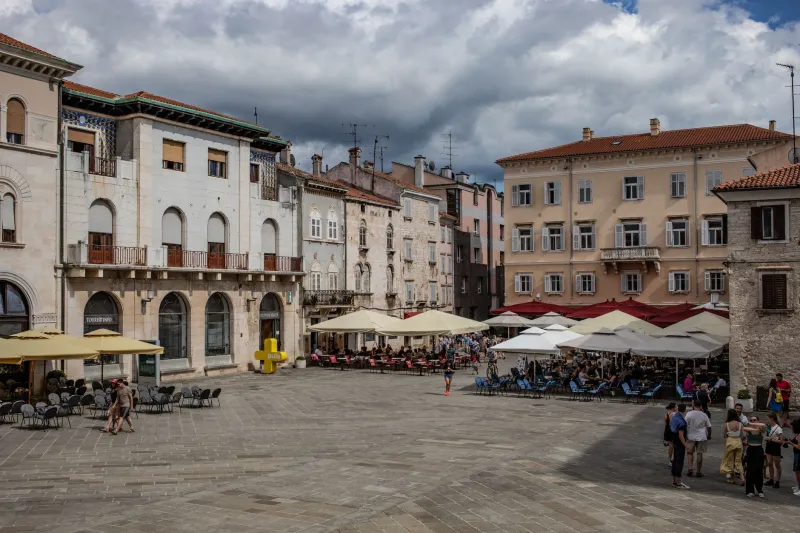
Pristina's nightlife geography is compact enough to cover on foot, which matters when you're trying to absorb multiple acts in a single evening. The city's bar and live music corridors have evolved considerably over the past decade, with a cluster of venues in and around the city center offering programming that ranges from DJ sets to live performances to open-mic nights where you genuinely cannot predict what you'll hear next.
Clubs and cultural spaces in Pristina have built reputations not by importing international headliners but by championing local and regional talent with the kind of curatorial seriousness that American indie venues in cities like Brooklyn or Portland have long applied to their own lineups. The difference is the price point. A night out in Pristina — cover charge, drinks, late-night food — costs a fraction of what the same evening would run in London, Amsterdam, or even Lisbon. For American travelers already stretching a budget across a longer European trip, that arithmetic is impossible to ignore.
Beyond Pristina, the music scene extends into other cities. Prizren, Kosovo's most visually striking historic town, hosts the renowned DokuFest each summer — an internationally recognized documentary and short film festival that has expanded its programming to include live music, outdoor screenings, and cultural events that draw visitors from across Europe and beyond. The festival's setting, beneath Ottoman-era architecture along the banks of the Bistrica River, provides a backdrop that no purpose-built festival site could manufacture.
How the Algorithm Became a Travel Agent
The pathway from digital discovery to physical arrival is worth examining closely, because it represents something genuinely new in how destinations build audiences. Kosovo's musicians have embraced streaming platforms and short-form video not merely as promotional tools but as primary stages. A track that circulates widely on TikTok — whether through an artist's own post or through the user-generated content that accumulates around a compelling sound — carries geographic metadata. Listeners notice. They search. They find that the artist is from Pristina, that Pristina is in Kosovo, and that Kosovo is a place they have never seriously considered visiting.
This discovery process bypasses the traditional travel media ecosystem almost entirely. No glossy magazine spread is required. No influencer partnership is necessary. The music does the work, and the curiosity it generates is proportionally more durable because it originates in genuine interest rather than sponsored content. American Gen Z travelers, who are statistically more skeptical of curated tourism marketing than any previous generation, respond to this kind of organic introduction with a trust they rarely extend to conventional destination advertising.
What American Music Tourists Actually Find
Visitors who arrive in Kosovo primarily for the music tend to leave with something they didn't expect: a much broader relationship with the country. The music scene, as it turns out, is a door rather than a destination. Walk through it and you find yourself in conversations with local artists who are also architects, graphic designers, and entrepreneurs. You find yourself eating dinner at 11 p.m. in a restaurant where the owner's playlist is indistinguishable from what you'd hear in a carefully curated Williamsburg bar, except that the food costs eight dollars and the wine is from a Kosovo vineyard you've never heard of.
The social geography of Pristina's music community is notably open to outsiders. American visitors who make even minimal effort to engage — who show up, who listen, who ask questions — are welcomed into conversations and after-show gatherings with a warmth that can feel disorienting to anyone accustomed to the velvet-rope culture of major Western music capitals. Kosovo's hospitality traditions run deep, and they extend naturally into creative spaces.
Planning a Music-First Visit
For American travelers considering Kosovo through a musical lens, a few practical considerations are worth noting. The country uses the euro, which simplifies budgeting for visitors coming from elsewhere in Europe. Pristina's venue scene is most active from Thursday through Saturday, with summer months bringing additional outdoor programming. DokuFest in Prizren typically runs in August and draws an international crowd that makes it an ideal entry point for first-time visitors who want the reassurance of a structured event alongside the freedom to explore independently.
Flights to Pristina from the United States generally route through major European hubs, making Kosovo a natural addition to a broader Balkans or Eastern Europe itinerary. The country's compact size means that a visitor based in Pristina can reach Prizren, Peja, and the northern highlands within an hour or two by road — allowing a music-focused trip to expand organically into hiking, heritage, and culinary exploration without requiring significant logistical effort.
Kosovo has never needed a marketing campaign to make its music scene compelling. The music itself has been doing that work, one algorithmic recommendation at a time. The only question is how long it takes the rest of the world to catch up.