Staying Longer, Living Deeper: Why Americans Are Choosing Kosovo as a Long-Term Home Base

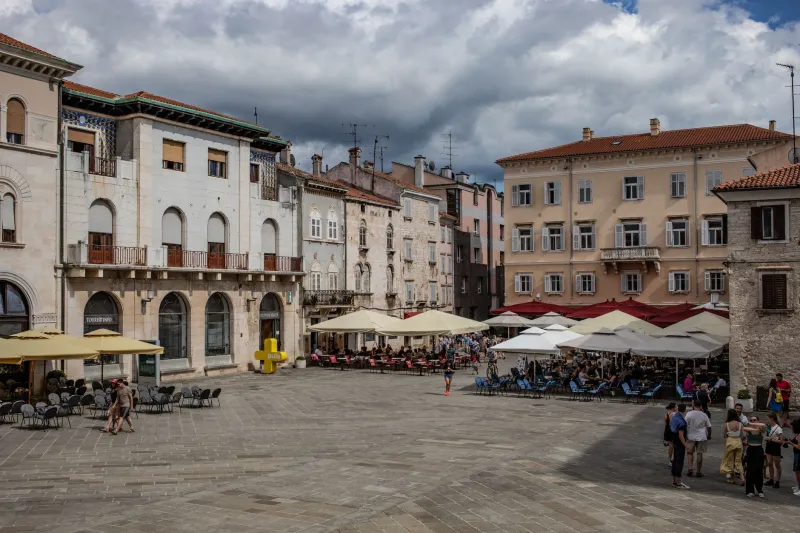
For most Americans, a trip to the Balkans means two weeks, a carry-on bag, and a carefully curated list of must-see sites. Kosovo, if it appears on the itinerary at all, tends to earn a day or two — a stop between Sarajevo and Skopje, a curiosity rather than a destination. But something is shifting. A quieter, more deliberate kind of traveler has begun arriving in Pristina, Prizren, and Peja, not with a return ticket booked in a fortnight, but with a laptop, a lease, and no firm plans to leave.
The slow travel movement — the philosophy that depth of experience outweighs breadth of destination — has found an unlikely champion in Kosovo. And the Americans who have committed to it here are not outliers. They are, increasingly, a community.
The Numbers Behind the Movement
Kosovo does not yet rank among the world's most recognized digital nomad hubs. It does not appear on the glossy shortlists beside Lisbon, Bali, or Medellín. But the conditions that made those cities attractive to location-independent workers — affordability, connectivity, a sense of possibility — are present here in equal or greater measure, and without the overcrowding that has since diminished the experience in many of those places.
Average monthly rent for a furnished one-bedroom apartment in central Pristina ranges from approximately $350 to $550, depending on the neighborhood and building. A sit-down lunch at a local restaurant rarely exceeds $6. A monthly public transit pass costs less than $15. For Americans accustomed to urban cost-of-living pressures in cities like New York, San Francisco, or Austin, these figures represent a fundamental restructuring of financial life — one that allows savings to accumulate while quality of life, paradoxically, improves.
Internet infrastructure has kept pace with demand. Kosovo's major cities offer fiber-optic connections that routinely exceed 100 Mbps, and coworking spaces have proliferated in Pristina in particular, catering explicitly to the remote workforce. Power outages, once a concern in the early post-war years, have become rare in urban centers.
Americans Who Made the Leap
Marcus, a 34-year-old UX designer from Portland, Oregon, arrived in Pristina on what he describes as "a two-week experiment" in the spring of 2022. He is still there.
"I came because a friend mentioned Kosovo almost as a joke — like, have you heard about this place? And I looked it up, and the cost of living was absurd compared to what I was paying in Portland," he explains. "But what kept me wasn't the money. It was the pace. People here have time for each other. That sounds like a cliché, but when you actually experience it, it resets something in you."
His monthly expenses, including rent, food, utilities, and occasional travel within the region, run between $1,100 and $1,400 — roughly a third of what his Portland life cost him. He works remotely for a design consultancy on the West Coast, managing the time difference with a shifted morning schedule.
Sarah, a 29-year-old content strategist from Chicago, came to Kosovo as part of a broader Balkan itinerary and extended her stay after discovering Prizren, the southern city whose Ottoman-era architecture and pedestrian-friendly old town she describes as "the most livable place I've ever been."
"There's a human scale to Prizren that I didn't expect," she says. "You walk everywhere. You know the guy who makes your coffee. The expat community is small enough that you actually become friends with people rather than just exchanging Instagram handles."
She has since connected with a loose network of foreign nationals — Americans, Germans, Swiss, and Kosovar diaspora returnees — who gather informally, share apartment leads, and navigate the practicalities of long-term residency together.
Visas, Residency, and Practical Realities
For American passport holders, Kosovo offers a notably accessible entry framework. Citizens of the United States may enter Kosovo visa-free and remain for up to 90 days within any 180-day period — a window that suits short-term stays comfortably. Those seeking to extend their presence have several pathways available.
A temporary residence permit, obtainable through the Ministry of Internal Affairs, allows stays of up to one year and is renewable. Applicants typically need to demonstrate a legal basis for residence — employment, self-employment, enrollment in an educational program, or family ties — along with proof of financial means and accommodation. The process, while bureaucratic, is generally described by those who have completed it as manageable, particularly with the assistance of a local attorney or relocation advisor.
Kosovo does not yet operate a formal digital nomad visa of the kind introduced by countries such as Portugal or Croatia, though the regulatory environment for self-employed foreign nationals has become increasingly navigable. Several Americans working remotely have registered as sole proprietors under Kosovo's business framework, a step that formalizes their status and, in some cases, offers favorable tax treatment relative to their home jurisdiction.
Potential long-term residents are advised to consult with a tax professional familiar with U.S. expatriate obligations, as American citizens remain subject to U.S. tax reporting requirements regardless of where they reside.
What Kosovo Offers That Other Hubs Do Not
The appeal of Kosovo as a long-term base cannot be reduced to economics alone. The country occupies a geographic position — central to the western Balkans, within easy reach of Albania, North Macedonia, Serbia, and Montenegro — that makes regional exploration genuinely practical. Weekend trips to the Albanian Riviera, the Macedonian lakes, or the Montenegrin coast are achievable by bus or car for modest sums.
Within Kosovo itself, the variety of environment is striking. Urban professionals based in Pristina can be in the Rugova Gorge or on the slopes of the Sharr Mountains within an hour. The country's compact scale — roughly the size of Connecticut — means that long-term residents rarely feel hemmed in.
Culturally, the experience of settling in Kosovo rather than passing through it is qualitatively different from tourism. Relationships form slowly and then deeply. Language acquisition — even a working familiarity with Albanian — opens dimensions of social life that remain inaccessible to the casual visitor. The hospitality for which Kosovar culture is widely noted shifts, over time, from a welcome extended to a stranger into something that more closely resembles genuine friendship.
A Destination Becoming Something More
The arrival of long-term American residents is not without consequence for Kosovo itself. Their presence contributes to local economies, supports small businesses, and introduces a form of cultural exchange that differs from the transactional dynamics of conventional tourism. It also poses questions worth considering thoughtfully — about affordability for local residents, about the pace of change in neighborhoods that attract foreign attention, and about how Kosovo's identity as a destination evolves as it becomes, for some, a home.
For now, the community remains small enough that these dynamics have not yet produced the tensions visible in more saturated nomad destinations. Kosovo retains what drew many of its long-term residents in the first place: a sense that it is still, in some meaningful way, undiscovered.
For Americans weighing the slow travel option, that quality may be the most compelling argument of all. The world's most popular long-term bases are no longer secrets. Kosovo, for a little while longer, still is.