Living Archives: How Kosovo's Elders Are Becoming the Country's Most Irreplaceable Guides
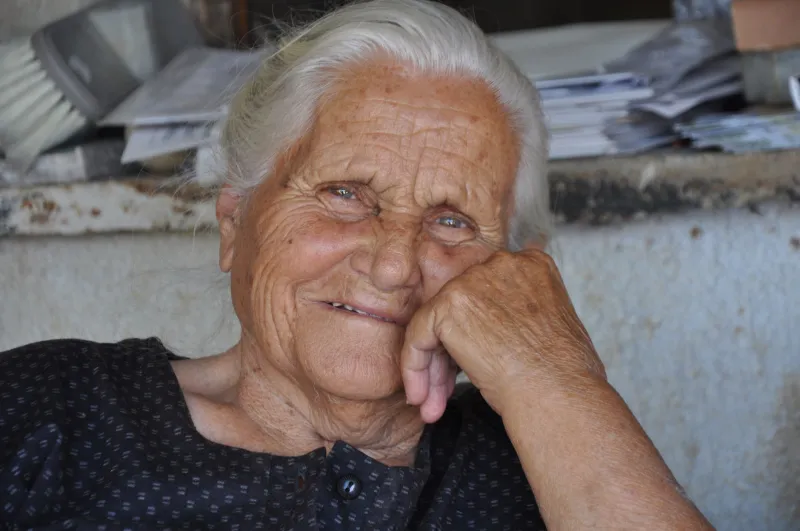
There is a particular kind of knowledge that cannot be digitized, translated into a walking tour app, or summarized in a travel review. It lives in the memory of a woman in her eighties who remembers the exact sound the market made on a Wednesday morning in the 1960s, or in the hands of a retired craftsman who can still trace the Ottoman-era trade routes his grandfather described to him as a boy. In Kosovo, that knowledge is increasingly becoming one of the country's most compelling — and most unexpected — tourism assets.
Across the country, a growing number of community-based initiatives are placing older Kosovars at the center of the visitor experience. The result is something American travelers, accustomed to curated museum exhibits and rehearsed walking tours, rarely encounter: unmediated access to living history.
A Century in One Conversation
Kosovo's twentieth century was, by any measure, extraordinary in its turbulence. The country passed through the final decades of Ottoman administration, absorption into successive Yugoslav states, decades of political suppression under Milošević, the catastrophic conflict of 1998–1999, and finally a declaration of independence in 2008. An eighty-year-old Kosovar today has not merely read about these transitions — they have inhabited each of them.
For American visitors, this compression of historical experience into a single human lifetime creates a form of encounter that is genuinely rare. Sitting across a low wooden table from a grandmother who fled her village on foot in 1999 and later returned to rebuild it is not a supplementary experience to visiting Kosovo. For many travelers, it becomes the defining one.
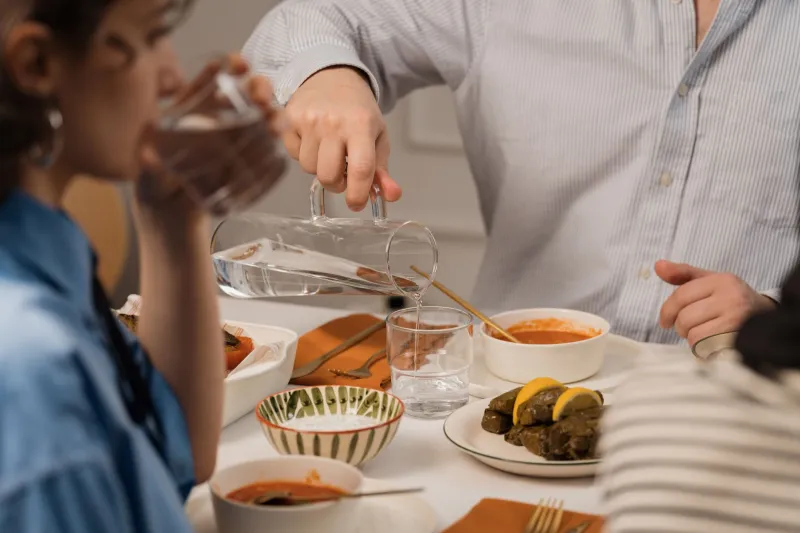
Local guides and community organizations in cities like Prizren, Peja, and Gjakova have recognized this and have begun formalizing what was previously informal. Elderly residents — many of whom spent decades as teachers, artisans, farmers, or civil servants — are now participating in structured cultural exchange programs that pair them with small groups of international visitors for conversations, shared meals, and neighborhood walks.
The Diaspora Bridge
One dimension of this phenomenon that carries particular relevance for American visitors is the extraordinary reach of Kosovo's diaspora. Hundreds of thousands of Kosovars emigrated to the United States over the past several decades, settling in communities across New York, New Jersey, Illinois, Michigan, and beyond. Many of those emigrants maintain deep family connections in Kosovo, and their American-born children and grandchildren are now returning as visitors — often for the first time.
For these travelers, meeting an elderly relative's neighbor, or sitting with a community elder who remembers a grandfather before he left for Chicago, is not tourism in any conventional sense. It is a form of recovery. And for Americans with no Kosovar ancestry, witnessing these reunions and hearing the stories that frame them offers a window into the human geography of migration that few destinations can provide.
Elderly guides are uniquely positioned to serve both audiences. They hold the connective tissue between Kosovo's present and its past, between the country as it exists today and the one that thousands of American families carry in their collective memory.
Knowledge That Doesn't Appear in Guidebooks
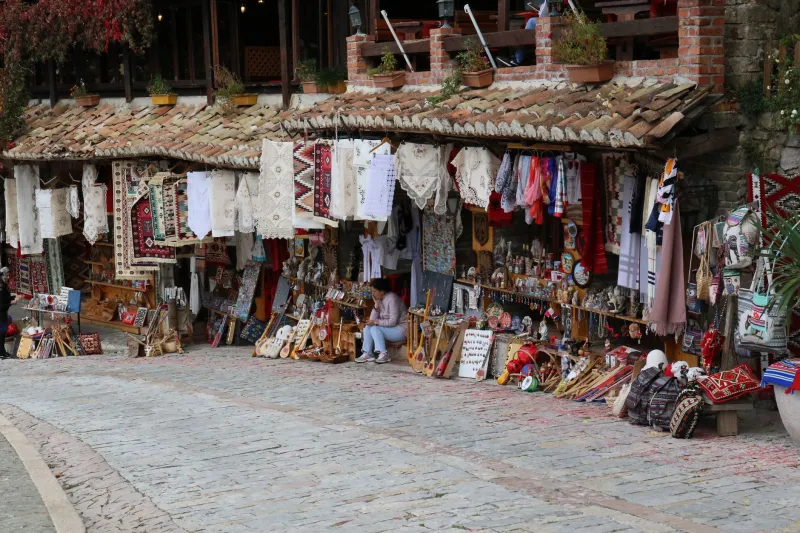
The content of what older Kosovars share with visitors is, by its nature, irreproducible. A retired schoolteacher in Prizren might walk a visitor through the city's old bazaar and explain not what the architecture signifies in the abstract, but what it felt like to shop there as a child, which families owned which stalls, and how the social texture of the neighborhood shifted across political eras. A former shepherd in the Rugova Valley might describe the unwritten protocols of mountain hospitality that governed relations between villages long before any tourism infrastructure existed.
This granular, personal specificity is precisely what the modern traveler — increasingly skeptical of sanitized experiences — tends to seek and rarely find. Kosovo's elderly population offers it in abundance, and with a generosity that visitors consistently describe as disarming.
The Albanian concept of besa — a word that encompasses trust, honor, and the sacred obligation of the host — is not an abstraction for these guides. It is something they have practiced across a lifetime, often under conditions that tested it severely. When they extend it to an American visitor, the gesture carries genuine weight.
Formalizing the Informal
Several organizations operating within Kosovo are working to support and sustain this form of cultural exchange without diminishing what makes it valuable. The challenge, as practitioners acknowledge, is significant: the goal is not to turn personal memory into performance, but to create conditions in which authentic exchange can occur reliably and with appropriate support for the participants.
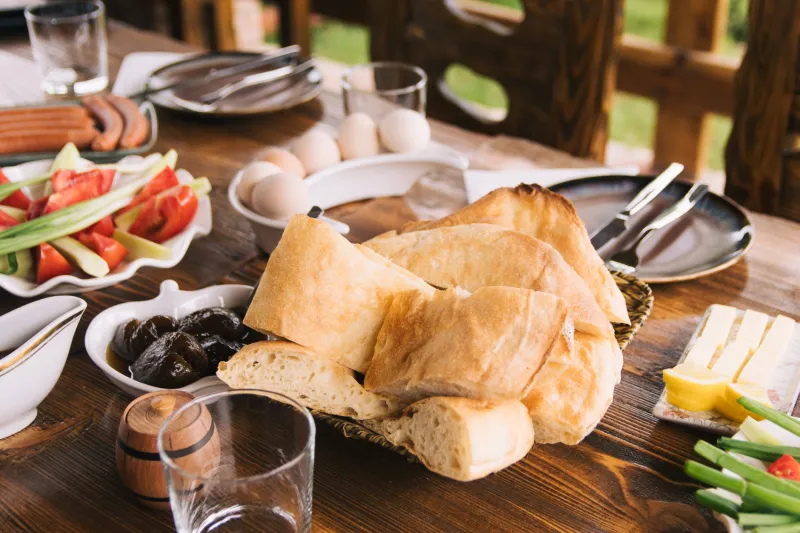
Some initiatives offer modest honoraria to elderly participants, ensuring that their contribution is recognized without transforming the encounter into a commercial transaction. Others work with local guesthouses and family-run accommodations to integrate elder storytelling sessions into multi-day itineraries, so that the experience feels continuous rather than staged.
For American travelers planning a trip to Kosovo, these programs are worth seeking out deliberately. They are not always prominently advertised, and they often require a degree of patience and flexibility that structured tours do not. The return on that investment, however, tends to be disproportionate.
Why This Matters Now
There is an unavoidable urgency to this subject. The generation of Kosovars who hold direct, embodied memory of the country's most transformative decades is aging. The window during which a traveler can sit with someone who remembers Kosovo before, during, and after its most pivotal transitions is finite in a way that no policy or program can fully address.
This is not a reason for sentimentality. It is a reason for intentionality. American travelers who visit Kosovo in the coming years have access to something that visitors a decade from now will not: the living testimony of people who were present for history rather than simply shaped by it.
The grandmother who pours your coffee and then, over the course of an afternoon, describes what it meant to preserve her family's identity across three different political systems is not a tourist attraction. She is a primary source. Kosovo is one of the very few places on earth where that primary source is still available — and where it is offered, in the spirit of besa, freely and without reservation.
For the American traveler willing to slow down and listen, that is an extraordinary privilege.