Where the Host Is Part of the Journey: Kosovo's Family Guesthouses and the Art of Genuine Welcome
There is a word in Albanian — mikpritja — that does not translate cleanly into English. Literally rendered, it means something close to "welcoming the guest," but the definition barely scratches the surface of what the concept actually demands. In Kosovo, mikpritja is not a service standard or a hospitality metric. It is a moral obligation, a point of family honor, and — for the American traveler increasingly fatigued by the frictionless sameness of platform-driven lodging — an experience that is genuinely difficult to replicate anywhere else on earth.
Kosovo's family-run guesthouses are the physical expression of this tradition. Scattered across mountain villages, historic towns, and the fertile plains between them, these accommodations operate on a fundamentally different logic than the booking platforms most American travelers rely upon. They are not optimized for throughput. They are not designed to minimize host-guest interaction. They exist, in the most direct sense, to bring people together — and that distinction changes everything about the experience of staying in them.
A Room With a Story Behind It
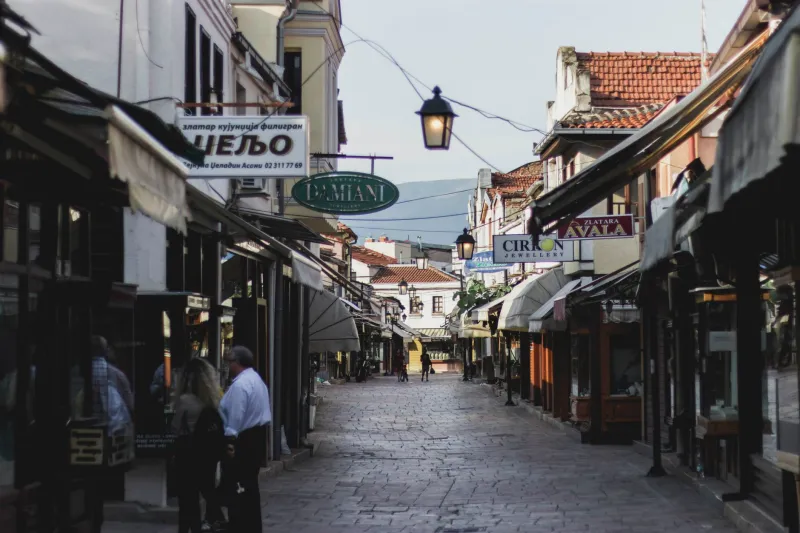
Walk into a well-regarded guesthouse in the Rugova Valley, the Sharr Mountains, or the old bazaar quarters of Prizren, and the first thing you will likely notice is that someone is genuinely glad to see you. Not in the practiced, professional way of a hotel concierge running through a script, but in the way that a family is glad to see a guest they have been expecting. The host may already know something about you — where you have traveled from, whether you have dietary preferences, how long you plan to stay — because they asked when you booked, and they remembered.
The rooms themselves tend to reflect the family's own aesthetic sensibilities: hand-embroidered linens, locally made pottery, framed photographs that tell something of the household's history. Many guesthouses in Kosovo occupy structures that have been in the family for generations, and the architecture often reflects layers of history — Ottoman-era stonework alongside mid-century additions, a courtyard garden that doubles as the kitchen's supply chain. Staying in these spaces means inhabiting a living piece of Kosovo's social fabric, not a neutral container designed to offend no one.
Breakfast as Cultural Immersion
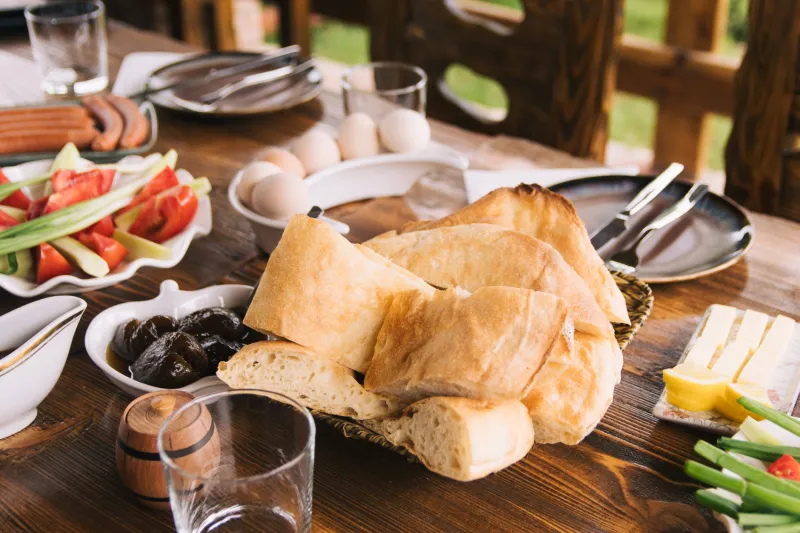
Perhaps no single element of the Kosovo guesthouse experience distinguishes it more sharply from conventional lodging than the morning meal. In most American hotels — and in the vast majority of short-term rental properties — breakfast is either an afterthought or an upsell. In Kosovo's family guesthouses, it is frequently the centerpiece of the stay.
Hosts in rural areas often source directly from their own land or from neighbors they have known for decades. Expect thick yogurt made from local milk, honey harvested from hives visible from the dining room window, bread baked the same morning, eggs from the yard, and seasonal preserves prepared the previous autumn. The flavors are not exotic for the sake of being exotic — they are simply what the land produces, prepared with care and set before you without ceremony or performance.
The meal also tends to generate conversation. A host who has just handed you a jar of her grandmother's fig preserves is naturally inclined to explain where the recipe came from. A father who grew the tomatoes on your plate may want to know what you think of them, and from there the conversation can move in any direction. For American visitors accustomed to the studied neutrality of hospitality-industry interactions, this ease of human exchange can feel startling at first, and then quickly indispensable.
The Countermovement to Curated Anonymity
The rise of platform-based travel accommodation has brought undeniable conveniences: instant booking, standardized reviews, predictable cancellation policies. But it has also produced a particular kind of traveler loneliness — the experience of moving through unfamiliar places without ever quite connecting to them, staying in spaces that have been carefully depersonalized to appeal to the broadest possible audience.
Kosovo's guesthouses represent a quiet countermovement to that tendency. Their appeal is not based on amenity lists or star ratings. It is based on the proposition that where you sleep and who you sleep near are not incidental details of a trip but central to the meaning of travel itself. This is not a marketing position adopted in response to shifting consumer preferences. It is simply how Kosovo has always understood the relationship between host and guest — and it is a perspective that has outlasted empires, survived extraordinary historical disruption, and emerged into the present day with its essential character intact.
For American travelers in particular, the contrast can be illuminating. The United States has its own traditions of regional hospitality — the bed-and-breakfast culture of New England, the porch-sitting warmth of the rural South — but these exist alongside a dominant travel infrastructure that prizes efficiency above all else. Kosovo offers a destination where the human dimension of hospitality has not been subordinated to operational convenience, and where the guest is understood to be a person rather than a booking reference.
Finding the Right Guesthouse for Your Journey
Kosovo's guesthouse landscape ranges from simple village homestays, where you may be the only guest and dinner is eaten with the family, to more developed boutique properties in historic urban centers that offer private amenities without sacrificing the personal character that defines the category. The Rugova Canyon area near Peja offers mountain guesthouses with dramatic natural settings and hosts deeply connected to the hiking and outdoor culture of the region. Prizren, Kosovo's most architecturally intact historic city, has a growing number of family-run accommodations within walking distance of the Ottoman bridge and the fortress above the old town. The Sharr Mountains near Brezovica attract visitors year-round, with guesthouses that shift their character with the seasons — summer hiking retreats in warmer months, cozy mountain refuges when the snow arrives.
Booking through Kosovo's developing rural tourism networks, or through local travel specialists rather than global platforms, tends to yield more authentic results and ensures that more of the economic benefit reaches the host families directly. It also opens the door to the kind of pre-arrival conversation — about what to bring, what to expect, what the host recommends — that sets the tone for the experience before it has even begun.
What You Take With You
Travelers who have stayed in Kosovo's family guesthouses frequently describe the experience in terms that go beyond the practical details of accommodation. They remember specific conversations. They remember the name of the host's daughter who translated during dinner, or the elderly grandfather who showed them photographs from the 1970s, or the moment a host insisted on driving them fifteen minutes out of the way to show them a view that wasn't in any guidebook.
These are not amenities that can be standardized, reviewed on a five-point scale, or replicated through platform design. They are the product of a culture that has decided, across centuries and through considerable adversity, that the guest deserves the best the household can offer — not because it is good for business, but because that is simply what it means to be a host.
For American visitors willing to exchange the predictable for the personal, Kosovo's guesthouses offer something increasingly rare in contemporary travel: the sense that where you stayed actually mattered, and that the people who welcomed you will remember you as clearly as you remember them.