Why Americans Are the Most Welcome Strangers in Kosovo — And What That Says About Both Countries
Most American travelers arrive in Kosovo braced for complexity. They've read enough about the Balkans to expect layers of historical grievance, guarded locals, and the kind of cautious hospitality that keeps visitors at arm's length. What they almost universally report instead is something far more disarming: warmth that feels immediate, personal, and entirely unperformed.
This is not an accident of geography or temperament. It is, in the most precise sense, a product of history — though not the kind of history that usually generates goodwill toward outsiders.
A Bond Forged in Crisis
To understand why Kosovars embrace American visitors the way they do, it helps to understand what 1999 meant to this country. When NATO intervened to halt the ethnic cleansing campaign that had displaced nearly a million Kosovo Albanians, the United States played a decisive leadership role. For many Kosovars, that intervention was not an abstraction of foreign policy — it was the moment the shelling stopped. It was the moment families came home.
That memory is not stored in archives. It lives in living rooms. Grandparents recount it to grandchildren. Parents point to the Bill Clinton statue on Pristina's main boulevard — a bronze figure on a main pedestrian thoroughfare — and explain what it represents. American flags still appear in windows and on bumper stickers across the country, decades after the fact. In a region where historical wounds tend to fester across generations, Kosovo's relationship with the United States has followed a remarkably different trajectory: gratitude that has deepened rather than faded.
"My father always told me that if an American ever comes to our home, we treat them like family," says Besa, a guesthouse owner in the Rugova Valley. "Not because we have to. Because we want to. There is a difference."
More Than Politics
It would be reductive, however, to frame Kosovo's welcome purely through the lens of geopolitical debt. The warmth Americans encounter here is broader and more textured than that.
Kosovo has one of the youngest populations in Europe — roughly half the country is under thirty — and that generation has grown up with American culture as a constant presence. English-language music, films, and social media have shaped how young Kosovars see the world and, crucially, how they imagine themselves within it. American visitors are not exotic emissaries from a distant civilization; they are, in a sense, familiar figures arriving in person for the first time.
This creates a particular kind of connection that travelers consistently describe as surprising. "I expected to feel like a foreigner," recalls Marcus, a teacher from Portland who spent two weeks traveling through Kosovo last summer. "Instead, I kept feeling like I'd wandered into a conversation that had already started. People knew American references, asked about cities I'd lived in, wanted to talk about everything from basketball to architecture. It wasn't forced. It felt genuinely curious."
The Diaspora Thread
There is another layer to this openness that many visitors don't initially recognize: Kosovo has a substantial diaspora in the United States, concentrated in cities like New York, Chicago, and Detroit. The result is that a meaningful portion of Kosovars have family members who have lived, worked, or studied in America. When an American traveler walks into a family-run restaurant in Prizren or a small hotel in Peja, there is a reasonable chance that the owner has a cousin in the Bronx or a sibling in Michigan.
This diaspora connection functions as an invisible bridge. It means that Americans are not strangers in the abstract — they are neighbors by extension, people who have shared sidewalks and schools and workplaces with Kosovo's own. The hospitality that flows from this recognition is specific and knowing in a way that generic friendliness toward tourists simply isn't.
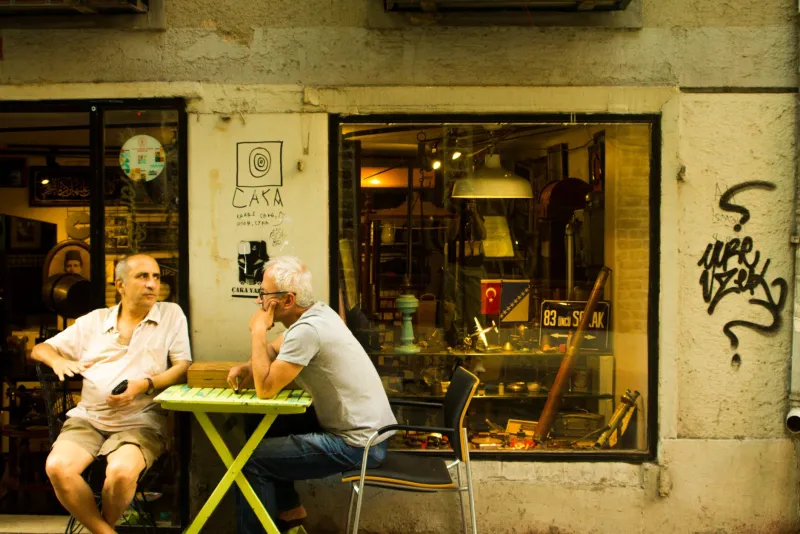
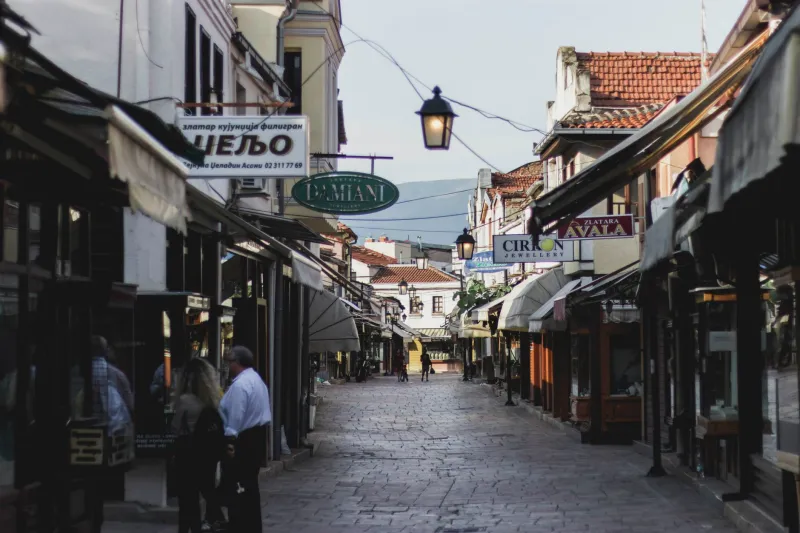
"My brother has lived in the United States for fifteen years," explains Driton, who runs a traditional craft shop in Prizren's old bazaar. "When Americans come here, I feel like I already know something about them. And I want them to know something real about us, not just what they've read."
Hospitality as Identity
Beyond the historical and demographic factors, there is something that might be called the Kosovar philosophy of hosting. The concept of besa — a code of honor rooted in Albanian tradition that encompasses trust, loyalty, and the sacred obligation to protect a guest — runs deep in this culture. It predates NATO, predates the modern state, predates recorded history in any conventional sense. It is, for many Kosovars, simply the correct way to be human.
For American visitors accustomed to transactional tourism — where hospitality is a service delivered in exchange for payment — encountering besa in practice can be genuinely disorienting. Strangers invite you to share meals. Shop owners offer coffee with no expectation of purchase. Families who've known you for twenty minutes extend invitations that feel entirely sincere. The instinct to search for an angle, to wonder what's being sold, gradually gives way to something simpler: the recognition that you are, without condition, welcome here.
"Americans sometimes look confused when we treat them this way," laughs Vjosa, a tour guide based in Pristina. "They keep waiting for the catch. There is no catch. This is just how we are."
What Visitors Carry Home
The travelers who return from Kosovo most transformed are often those who arrived most skeptical. They came expecting the Balkans of newspaper headlines — fractured, suspicious, exhausted by history — and found something that confounded every assumption: a country that has chosen, with remarkable intentionality, to face the world with openness.
That choice is not naive. Kosovars know their history with precision. They have not forgotten what was done to them, and they have not pretended that complexity doesn't exist. But they have also decided, collectively and individually, that the past does not have to determine how they receive the future — or the strangers who arrive carrying it.
For American visitors, that lesson tends to land with unexpected force. In a moment when the United States is reckoning with its own divisions and uncertainties, there is something quietly instructive about a small country that has found a way to extend genuine trust across the distance between peoples.
Kosovo does not simply welcome Americans. It reminds them, perhaps, of what welcome actually means.
Planning your first visit to Kosovo? Explore our guides to Pristina, Prizren, and the country's extraordinary natural landscapes at visitkosova.org.