Rebuilt From the Ground Up: What Kosovo's Urban Renaissance Can Teach America's Struggling Cities
A City That Refused Its Own Narrative
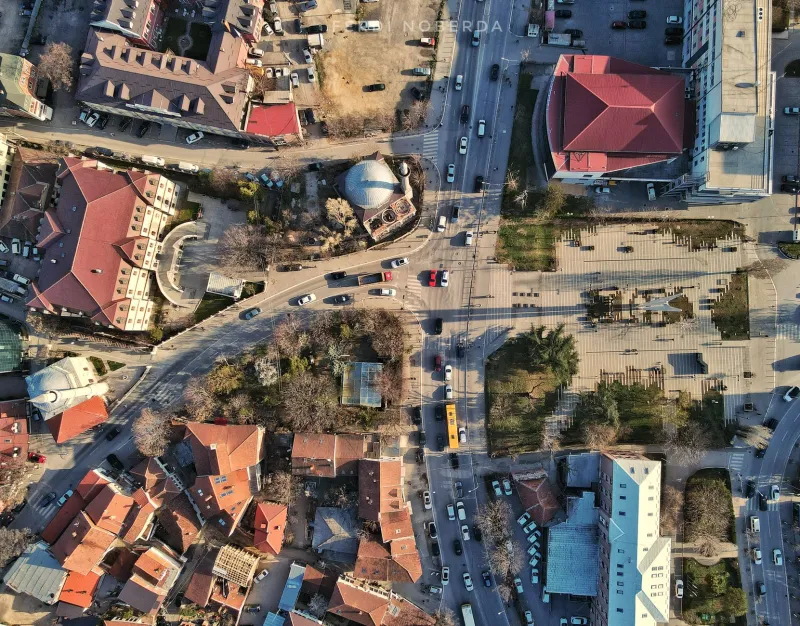
There is a particular kind of city that the world has already decided about. It has been assigned a story — one of ruin, of loss, of things that cannot be undone. Pristina, Kosovo's capital, knows that story well. For much of the late twentieth century, it existed in the world's imagination primarily as a dateline on a dispatch from a war zone. Today, visitors arriving for the first time are confronted with something that defies those expectations entirely: a city in full, restless motion.
New galleries occupy former warehouses. Outdoor terraces spill across pedestrian boulevards where, a generation ago, movement itself was a risk. Young architects are reclaiming brutalist-era buildings not by erasing them, but by reinterpreting them — layering new purpose over old structures in a way that neither denies history nor is paralyzed by it. For American travelers, particularly those who come from cities wrestling with their own versions of decline, the effect is quietly revelatory.
Kosovo's post-conflict transformation is not a finished story. It is an ongoing civic argument, conducted loudly and publicly, about what a place owes its past and what it owes its future. That argument, it turns out, is deeply familiar to anyone who has watched Detroit negotiate its identity, or followed the slow reinvention of cities like Baltimore, Gary, or Youngstown.
The Grassroots Impulse
What distinguishes Kosovo's urban recovery from many top-down reconstruction efforts is the degree to which ordinary residents — and especially young people — drove the process. In Pristina, organizations like Termokiss, a community hub that converted a derelict heating facility into a cultural center, exemplify an approach that American urban planners have increasingly come to champion: adaptive reuse powered by community ownership rather than municipal decree.
The parallel to American models is striking. From the High Line in New York City to the Ponce City Market in Atlanta, some of the most celebrated urban renewal projects in the United States have succeeded precisely because they began with local advocates who saw potential where institutions saw liability. Kosovo's version of this impulse emerged under far more constrained circumstances — limited capital, fragile institutions, and the psychological weight of recent trauma — which makes its achievements all the more instructive.
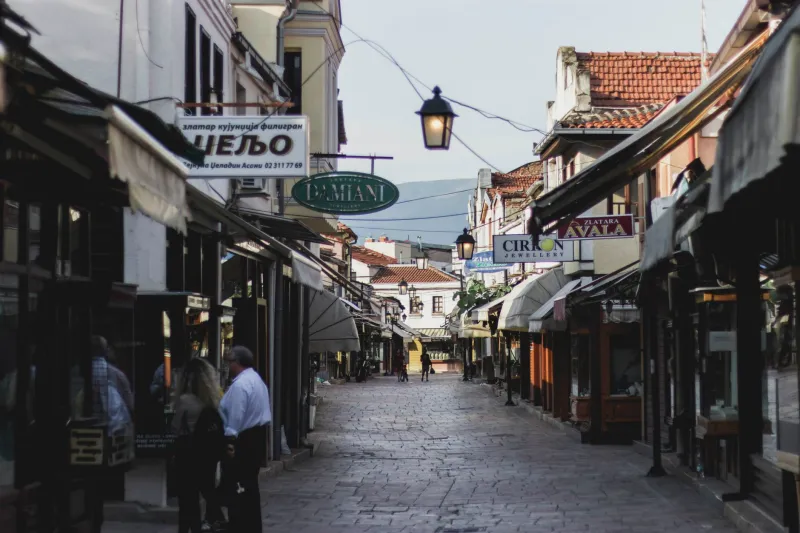
In Prizren, Kosovo's most visually arresting city, a similar dynamic unfolded along the banks of the Lumbardhi River. The old stone bazaar district, which had suffered both wartime damage and decades of socialist-era neglect, was not restored through a single grand intervention. It was recovered incrementally, building by building, through a combination of international preservation funding and intensely local pride. Walking those cobblestone lanes today, past restored Ottoman-era facades and independent cafés, it is difficult not to think of comparable efforts in American neighborhoods — the slow, contested, occasionally miraculous work of people who decided that a place was worth fighting for.
Architecture as Civic Argument
No visit to Kosovo is complete without grappling with its architecture, which functions less as aesthetic backdrop and more as a running public debate. Pristina's skyline is a collision of eras: socialist-era towers, post-independence construction booms, and the occasional surviving Ottoman structure that somehow endured everything. The city does not resolve this collision so much as live inside it, which gives it an energy that more historically uniform European capitals often lack.
For American visitors accustomed to cities where urban renewal has sometimes meant erasure — where entire neighborhoods were demolished in the name of progress, leaving communities dispersed and histories buried — Kosovo's willingness to preserve contradiction is both unusual and thought-provoking. The National Library of Kosovo, a structure so architecturally idiosyncratic that it has inspired decades of passionate disagreement, stands today not as an embarrassment to be hidden but as a landmark to be argued over. There is a civic maturity in that stance, a recognition that a city's difficult objects are also part of its identity.
Smaller cities across Kosovo offer their own architectural lessons. Gjakova's old bazaar is among the best-preserved in the region, a living commercial district where craft workshops and family-run shops occupy buildings that have served the same purpose for centuries. The continuity is not accidental — it reflects deliberate choices by residents and local authorities to resist the pressure toward generic modernization. For Americans who have watched historic main streets hollowed out by big-box retail, the vitality of Gjakova's bazaar carries a certain wistfulness alongside its charm.
Youth as Infrastructure
Perhaps the most transferable lesson Kosovo offers is demographic rather than architectural. Kosovo is one of the youngest countries in Europe, with a median age well below the continental average. That youth is not merely a statistic — it is the animating force behind much of what makes the country's cities feel alive. Young Kosovars are opening businesses, founding nonprofits, organizing festivals, and demanding accountability from institutions, all simultaneously.
American cities that have successfully reversed decline — Pittsburgh's technology-sector pivot, the creative economy revival in places like Chattanooga, Tennessee — have frequently cited the retention and attraction of young talent as the pivotal variable. Kosovo's cities did not have the luxury of attracting talent from elsewhere; they had to cultivate and retain the energy already present. The result is an urban culture that feels earned rather than imported, rooted rather than performed.
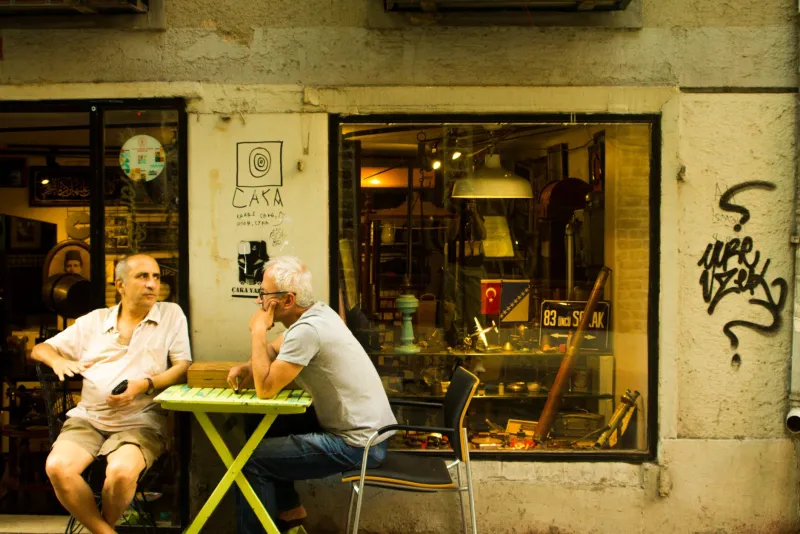
For the American visitor, spending time in Pristina's café culture or attending one of Prizren's summer festivals is not simply tourism. It is an encounter with a civic energy that has been stress-tested in ways that most Western cities have not experienced. The resilience on display is not abstract — it is visible in the faces of people who rebuilt something from very little and are not finished yet.
What the Journey Offers
Visiting Kosovo with this frame in mind transforms the experience. A walk through Pristina becomes a case study in urban identity under pressure. A conversation with a local architect becomes a seminar in adaptive design. An afternoon in Prizren's restored bazaar becomes a meditation on what preservation actually means when the stakes are existential rather than aesthetic.
None of this requires a background in urban planning or civic policy. Kosovo's cities are genuinely beautiful, genuinely welcoming, and genuinely interesting on their own terms. The lessons are embedded in the experience rather than appended to it. You do not need to look for them — they find you, usually somewhere between your second coffee and the moment you realize you have been sitting in a converted industrial space for two hours, completely at ease, in a city the world once wrote off.
That, perhaps, is the most unexpected parallel of all: the discovery that resilience, at sufficient scale and with sufficient time, begins to look a great deal like vitality.