No Crowds, No Itinerary Police: How Kosovo Quietly Cures the Burned-Out American Traveler
There is a particular kind of exhaustion that accumulates not from long flights or jet lag, but from the relentless performance of tourism itself. Americans who have stood shoulder-to-shoulder on the Ponte Vecchio, waited ninety minutes for a gondola, or navigated the Colosseum through a wall of selfie sticks will recognize it immediately. The destination was beautiful. The experience was hollow. And somewhere between the third audio guide and the fourth overpriced espresso served to a numbered group, the trip stopped feeling like travel at all.
Kosovo does not have this problem — and that absence is, arguably, its greatest asset.
What Isn't There Matters as Much as What Is
Kosovo has no cruise ship terminal. It has no UNESCO-certified old town that charges entry fees and closes at five. It has no consolidated tour bus parking lot that empties a thousand identically briefed visitors onto a single cobblestone square every forty-five minutes. These are not gaps in Kosovo's tourism infrastructure. They are, for the traveler who has reached a point of genuine destination fatigue, the entire point.
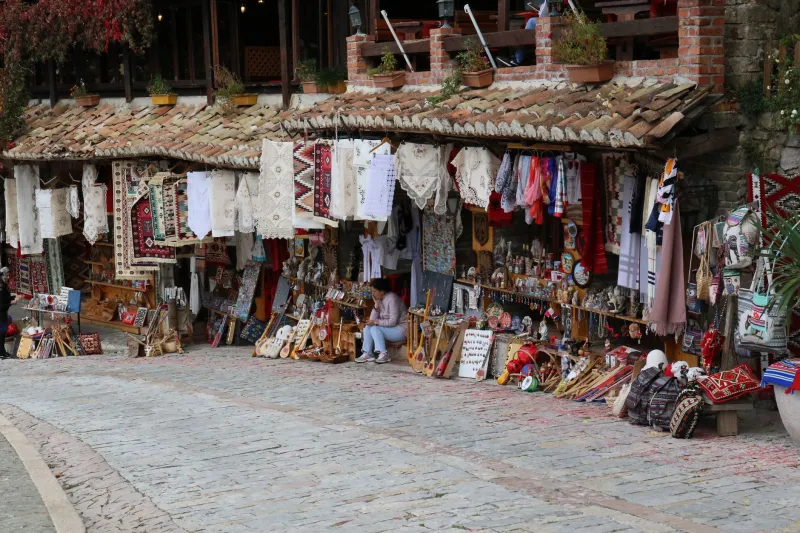
When you walk through the Old Bazaar in Prizren on a Tuesday morning, you are not navigating a choreographed heritage experience. You are walking through a place where people actually conduct their lives — where a craftsman is repairing leather goods at the same bench his father used, where a woman is selecting produce with the focused attention of someone who eats what she buys. The scene is unrehearsed because no one is rehearsing it for you. That distinction, subtle as it sounds, changes everything about how the moment registers.
Research on travel psychology consistently notes that the sense of genuine discovery — of encountering something not yet packaged for consumption — is among the most restorative experiences a trip can produce. Kosovo, precisely because it sits outside the established European tourism circuit, delivers that experience by default.
The Geometry of Uncrowded Space
Consider what it means, physically, to move through a landscape without competing for it. In Kosovo's Rugova Canyon, you can stop your vehicle on a mountain road and hear nothing except water moving over stone. At the monastery of Visoki Dečani, you may find yourself the only non-monastic visitor for an entire afternoon, standing in front of fourteenth-century frescoes in a silence that amplifies rather than diminishes their power. On the hiking trails above Brezovica, the footpath ahead of you is likely empty in both directions.
For Americans accustomed to booking Yosemite permits months in advance or arriving at national park trailheads before sunrise to secure a spot, this kind of uncontested access to natural and cultural sites can feel almost disorienting at first. The absence of a queue feels like a mistake. It is not. It is simply what travel looked like before mass tourism turned scarcity into a selling point.
The practical benefits extend beyond aesthetics. Without large group tour infrastructure setting the pace, your itinerary belongs to you. You can linger. You can return to the same café twice in one day because the conversation was good. You can take a wrong turn and discover a village that does not appear in any guidebook, where curiosity will be met with hospitality rather than a posted sign directing you to the gift shop.
Human Scale and What It Restores
One of the quieter arguments for Kosovo as a travel destination is the quality of interaction it makes possible. In destinations where tourism has become the dominant economic and cultural force, locals and visitors exist in a kind of mutual transaction: the visitor wants an experience, the local provides a service, and the exchange is efficient, professional, and fundamentally impersonal.
Kosovo operates on different terms. Tourism here is still new enough, and small enough in scale, that visitors are genuinely interesting to the people they meet — not as revenue sources, but as people. A conversation started over coffee in Gjakova is likely to become a conversation about where you are from, what you do, what you think of the country, and whether you would like to meet someone's cousin who lived in Chicago for six years. These exchanges are not engineered. They happen because the ratio of visitors to residents has not yet tipped toward the point where locals stop looking up.
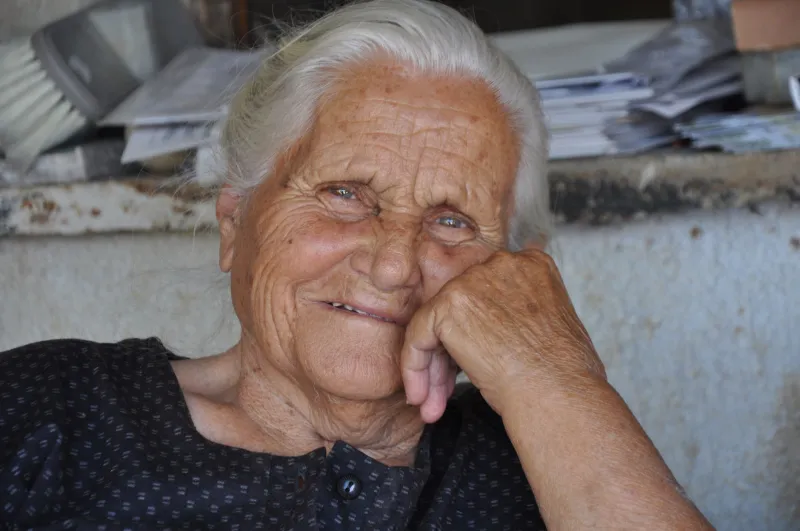
For travelers experiencing what might be called Instagram-driven destination fatigue — the creeping sense that every place worth visiting has already been photographed, captioned, and optimized — this human dimension is restorative in a way that no scenic viewpoint can replicate on its own.
Slowness as a Feature, Not a Flaw
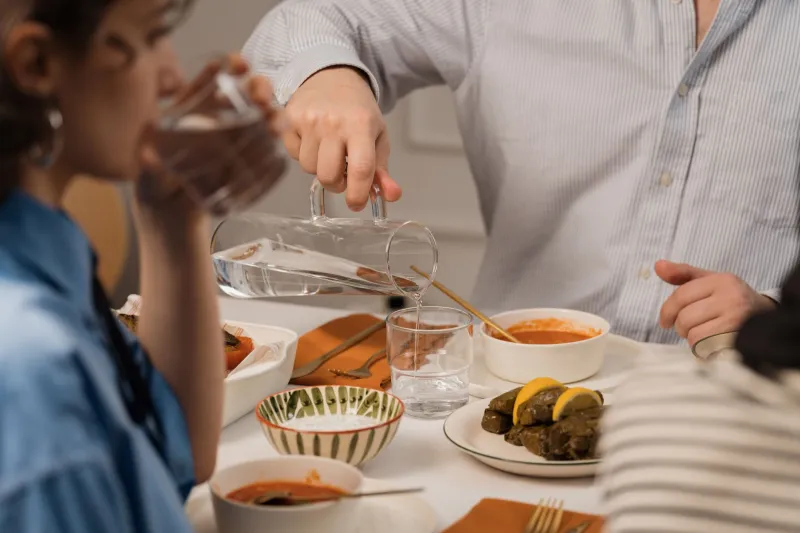
Kosovo moves at a pace that rewards patience. Coffee is not a transaction here; it is a duration. Meals are structured around conversation. Evenings in Pristina's pedestrian zone, the Bulevardi Nënë Tereza, unfold without urgency, the city's younger population occupying outdoor tables with the unhurried confidence of people who have nowhere more important to be.
For the American traveler conditioned to maximize every travel day — to see the cathedral, the museum, the viewpoint, and the market before noon — this pace initially requires adjustment. But it is precisely this adjustment that makes Kosovo effective as an antidote to burnout. The country gently insists that you slow down, not through inconvenience, but through an ambient atmosphere that treats unhurried time as entirely normal.
That reorientation — from optimizing to experiencing — is, for many visitors, the most significant thing they bring home.
Arriving Before the Crowd Does
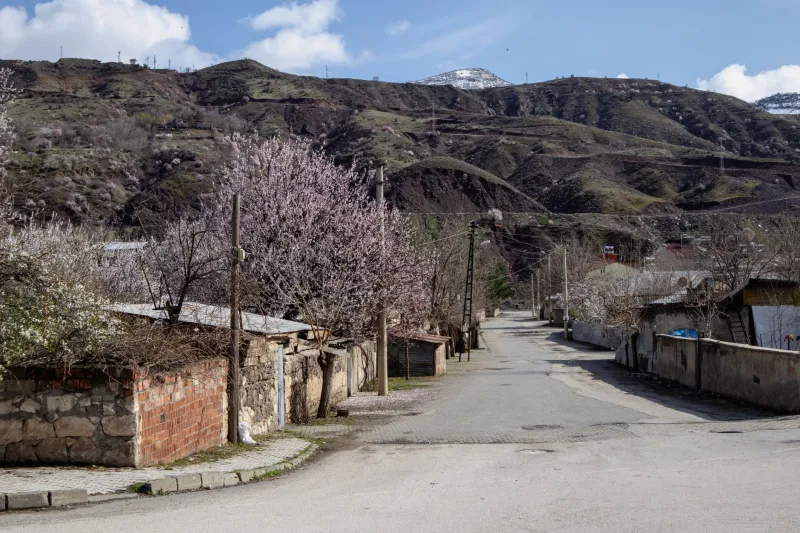
There is also a practical consideration for the traveler who thinks in terms of timing rather than just mood. Kosovo is, by any reasonable measure, at an early stage of its international tourism arc. The infrastructure is improving, English is widely spoken among younger residents, and direct or single-connection flights from major US hubs make access straightforward. But the crowds that will eventually discover Prizren's skyline, the Sharr Mountains, and the medieval monasteries of the Metohija region have not yet arrived.
Visiting Kosovo now means encountering these places at something close to their natural state — before the boutique hotels multiply, before the walking tour operators stake out corners, before the café that currently serves the best burek in the Balkans adds a line of waiting tourists to its morning routine.
Travel history suggests that windows like this close. The travelers who visited Lisbon in 2010, Dubrovnik in 2005, or Ljubljana a decade ago know exactly what was gained by arriving before the discovery wave crested. Kosovo is at that inflection point now.
The Antidote Is Already Here
Travel burnout is, at its core, a loss of novelty — the feeling that every destination has been pre-digested and delivered to you in a form that requires nothing of your attention or imagination. Kosovo refuses that model, not as a marketing strategy, but as a simple consequence of where it stands in its own history.
The silence at a mountain pass, the unhurried conversation over raki, the monastery courtyard where your footsteps are the only sound — these are not curated experiences. They are what remains when mass tourism infrastructure has not yet arrived to organize them on your behalf.
For the American traveler who has grown weary of collecting experiences rather than having them, that distinction is everything.