Caravans, Cobblestones, and Commerce: Tracing Kosovo's Ancient Trade Corridors

Photo by Photo by Fatih Beki on Unsplash on Unsplash
For most American travelers, the Silk Road conjures images of Central Asian deserts and Chinese caravanserais. Yet one of that great network's most consequential western branches passed directly through the territory we now call Kosovo—threading silver ore, Venetian cloth, Ottoman spices, and Ragusan merchants through high Balkan passes for centuries. That story is only now being fully told, and the telling is happening on foot, along paths that locals are carefully restoring for a new generation of visitors.
A Crossroads Hidden in Plain Sight
Kosovo occupies a geographic position that medieval traders understood instinctively: it sits at the convergence of routes connecting the Adriatic coast with Constantinople, and the Danube basin with the Aegean. The Vardar–Morava corridor, which runs close to Kosovo's eastern edge, was one of antiquity's primary arteries. Meanwhile, the Nerodimka River watershed served as a natural funnel pushing commerce northward from Macedonia.
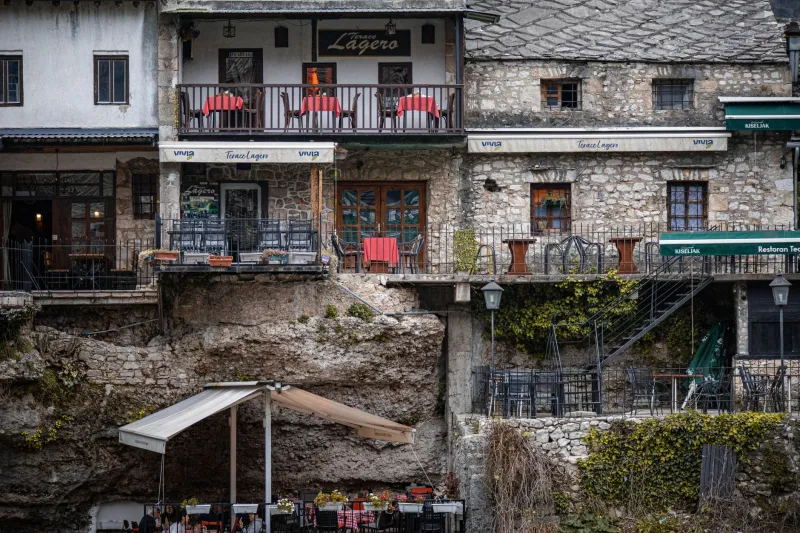
Prizren, Kosovo's southern cultural capital, rose to prominence precisely because it commanded several of these intersecting paths. At its medieval peak, the city hosted merchants from Dubrovnik (then Ragusa), Venetian trading houses, and Ottoman caravans simultaneously. Merchants paid tolls, stored goods, exchanged currency, and negotiated contracts in a multilingual, multicultural marketplace that would feel recognizable to anyone who has visited Istanbul's Grand Bazaar—except that Prizren predates much of what tourists see in Istanbul today.
For American visitors accustomed to history measured in centuries rather than millennia, standing in Prizren's old bazaar district and understanding that the commercial logic of the street has remained essentially unchanged for six hundred years is genuinely disorienting—and genuinely thrilling.
What Survives: The Physical Evidence
The most tangible remnants of Kosovo's trade heritage are its caravanserais—roadside inns designed to shelter merchants, their animals, and their cargo overnight. These structures, built primarily during the Ottoman period between the fifteenth and eighteenth centuries, followed a remarkably consistent architectural template: a fortified outer wall, an interior courtyard large enough for loaded pack animals, sleeping quarters on an upper gallery, and a well or cistern at the center.
Several examples survive in various states of preservation. The Han i Elezit complex near the North Macedonian border retains enough structural integrity to communicate the scale of medieval commercial hospitality. In Gjakova, the old bazaar—one of the best-preserved in the region—still functions as a working marketplace, its wooden-fronted shops occupying the same footprint they did when Ottoman caravans arrived from Shkodra and Sarajevo. Walking its length on a weekday morning, past copper smiths, textile merchants, and coffee vendors, requires very little imagination to collapse the distance between past and present.
Prizren's Çarshia—the central bazaar area beneath the Kalaja fortress—offers perhaps the most concentrated experience. The fortress itself, which Byzantines, medieval Serbian rulers, and the Ottomans all occupied and modified, looks down over rooftops that have sheltered commerce for longer than the United States has existed as a nation.
The Revival: Communities Reclaiming Their Routes
What distinguishes Kosovo's current moment from simple heritage tourism is the degree to which local communities are actively reconstructing the narrative, not merely preserving the physical artifacts. A cluster of NGOs, municipal governments, and individual entrepreneurs have begun mapping and waymarking the historic trade paths as walkable and rideable trails, combining archaeological interpretation with authentic village hospitality.
The Via Dinarica trail system, which passes through Kosovo's western highlands, incorporates several segments that follow documented medieval trade routes through the Bjeshkët e Nemuna (Albanian Alps). Guides trained by local cultural associations can point out where caravans would have rested, where toll stations once stood, and which villages grew wealthy servicing passing commerce. These are not reconstructed experiences performed for tourists—they are living communities that have maintained oral memory of their commercial heritage across generations.
In the Drenica valley, community-led initiatives are connecting visitors with families who still practice crafts—copperwork, filigree jewelry, traditional textile weaving—that trace their origins directly to the goods traded along these routes. A morning spent watching a Gjakova coppersmith work is, in a very real sense, a direct encounter with the Silk Road's western terminus.
Planning Your Journey Along Kosovo's Trade Heritage
For American travelers considering this itinerary, a practical note on sequencing: Prizren serves naturally as the southern anchor, with its fortress, bazaar, and the League of Prizren Museum providing essential historical context. From there, a route northwest to Gjakova allows visitors to experience the old bazaar and arrange guided walks along segments of the historic Shkodra road. The Rugova Gorge, northwest of Peja, offers dramatic mountain scenery along a corridor that pack animals navigated for centuries between Kosovo and the Adriatic coast.
Accommodation options have expanded meaningfully in recent years. Guesthouses in Prizren's old city offer rooms in restored Ottoman-era buildings, placing visitors inside the architectural heritage rather than adjacent to it. Several operators now offer multi-day guided treks that combine trail walking with overnight stays in village guesthouses, where meals are prepared from locally sourced ingredients and conversation—often facilitated by younger family members who speak English—flows naturally toward history, identity, and the meaning of place.
Why This Journey Matters Now
There is an urgency to this kind of travel that thoughtful visitors will recognize. Kosovo's historic urban fabric, particularly in cities like Prizren and Gjakova, faces the same pressures of development and demographic change that have altered or erased comparable heritage environments elsewhere in the Balkans. The communities investing in trade-route tourism are making a deliberate argument: that the past is economically viable, that preservation pays, and that foreign visitors who come specifically to engage with authentic heritage create incentives for conservation that no government policy alone can generate.
When an American traveler chooses a restored han guesthouse over an international chain hotel, or hires a local guide rather than relying on a generic app, they are participating in that argument. Kosovo's ancient trade corridors moved silver and silk for centuries. Today, they move something equally valuable: the kind of meaningful cultural exchange that reminds both visitor and host that commerce, at its best, has always been about more than goods.