What the World Gets Wrong About Kosovo — And Why That's Your Opportunity
There is a peculiar advantage that comes with being underestimated. Athletes know it. Entrepreneurs know it. And increasingly, a quiet cohort of American travelers is discovering that Kosovo knows it too.
For years, Kosovo has occupied a complicated position in the Western imagination — if it has occupied one at all. Mentioned primarily in the context of 1990s conflict, geopolitical dispute, or Balkan complexity, it rarely surfaces in the kind of aspirational travel coverage that fills American lifestyle magazines. And yet, for the traveler willing to step past the headlines and inherited assumptions, this absence of hype has quietly produced something extraordinary: a country that remains genuinely, almost defiantly, itself.
The Narrative Gap and What Lives Inside It
American travelers arrive in Kosovo carrying, at best, incomplete information. At worst, they carry outdated impressions shaped by news cycles that ended before many of today's visitors were old enough to read a newspaper. The conflict that defined Kosovo's entry into global consciousness concluded more than two decades ago. What has happened since — the reconstruction, the institution-building, the generational reinvention — has largely gone unreported in the Western press.
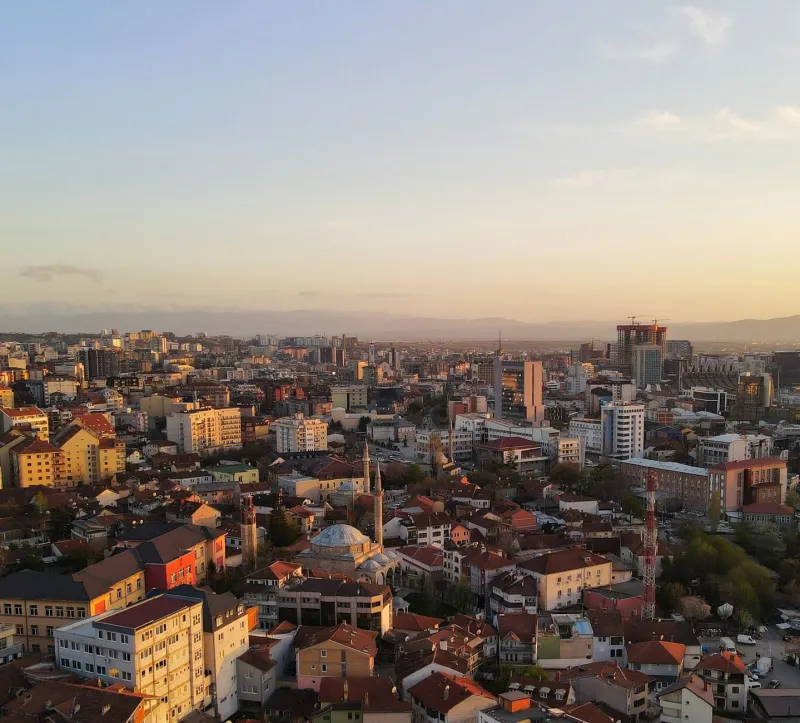
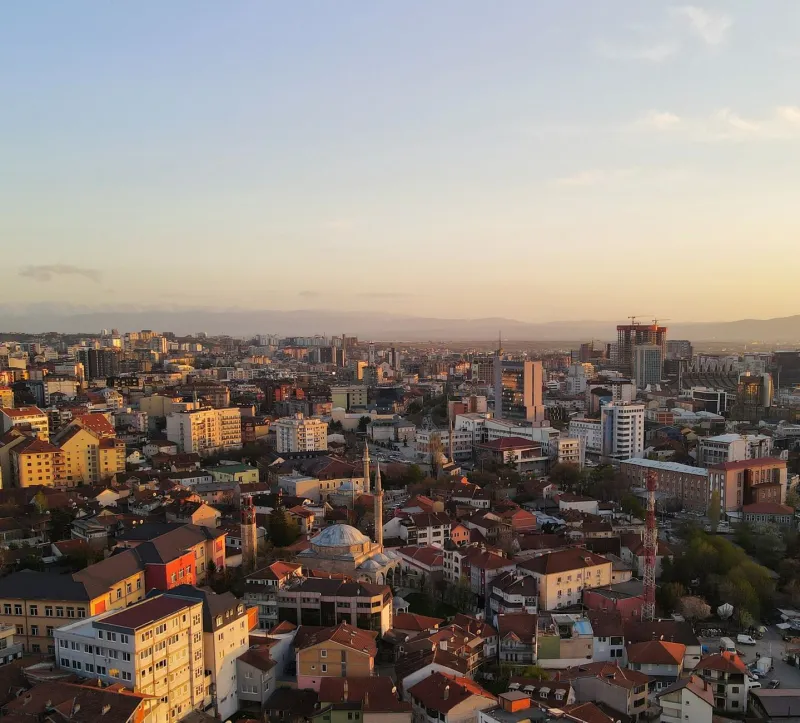
That narrative gap is not a vacuum. It is filled with lived reality: a young, energetic population that has rebuilt a country from the ground up; a capital city, Pristina, that hums with the particular confidence of a place that has survived something and chosen, consciously, to move forward; a landscape of medieval monasteries, alpine meadows, and Ottoman-era bazaars that exists in almost complete obscurity to the international tourism market.
For the American visitor, this gap between reputation and reality is not a liability. It is an invitation.
When Low Expectations Become High Returns
Travel writers have long observed that the best destinations are often the ones that arrive without advance fanfare. The moment a place becomes universally celebrated, something shifts. Restaurants adjust their menus toward international palates. Guesthouses begin pricing for demand rather than hospitality. The locals who once engaged strangers with genuine curiosity start to grow weary of the parade.
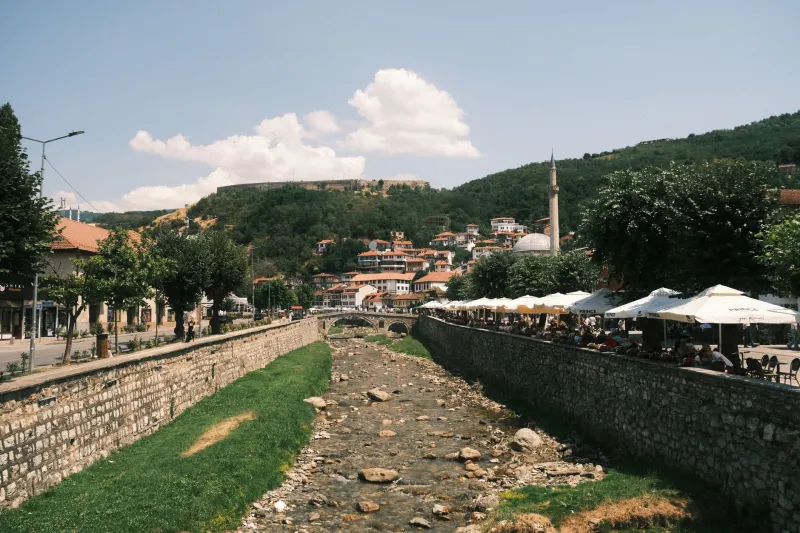
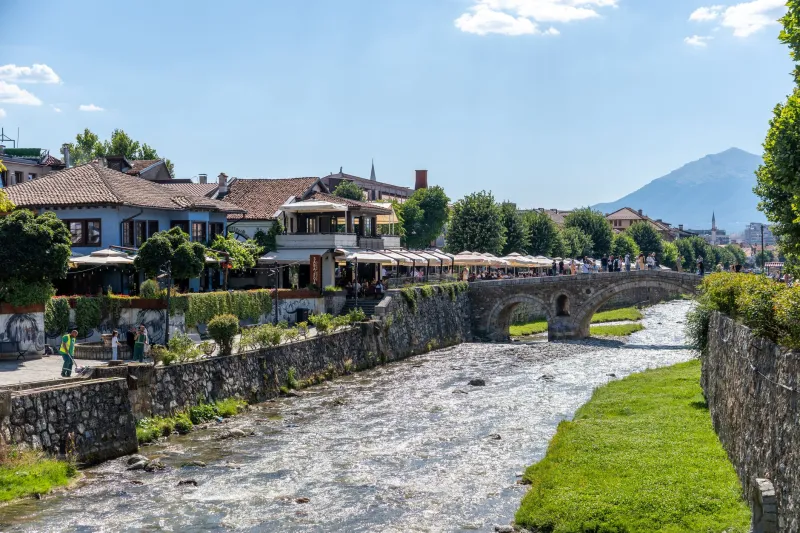
Kosovo has not yet crossed that threshold. Visitors who arrive in Prizren — the country's most visually striking city, draped across a hillside above a medieval fortress — are not navigating crowds or competing for photographs. They are, in many cases, the only foreign travelers on the street. The proprietor of the coffee house by the river is not performing hospitality for a tourist demographic. He is simply being hospitable, because that is the cultural inheritance he carries.
This distinction matters more than it might initially appear. Authenticity, in travel as in most things, cannot be manufactured after the fact. It exists in places that haven't yet needed to manufacture it — and Kosovo, by virtue of its low profile, remains one of those places.
The Geopolitical Discount and Why It's Irrational
Here is a question worth sitting with: how much of what we consider a worthy travel destination is shaped by geopolitical prestige rather than actual experience?
Certain European capitals carry automatic cultural credibility — not necessarily because they offer richer encounters, more genuine connection, or more remarkable landscapes, but because they have been featured, photographed, and endorsed so many times that their value feels self-evident. Kosovo, by contrast, carries none of that institutional endorsement. It is not a member of the United Nations. Several countries, including some in Western Europe, have not recognized its independence. These facts, while significant in diplomatic terms, have almost no bearing on the quality of a traveler's experience on the ground.
What they do have bearing on is price, crowd density, and the degree to which the country has been optimized for mass tourism. On all three counts, Kosovo's geopolitical ambiguity works in the visitor's favor. Costs remain among the lowest in Europe. Infrastructure has improved substantially without being overbuilt for tourism. And the country's orientation toward visitors remains shaped by genuine welcome rather than transactional efficiency.
The traveler who allows geopolitical skepticism to determine their itinerary is, in effect, allowing other people's political calculations to govern their own experience. That is a significant concession to make.
Transformation as a Travel Category
There is a particular kind of travel that goes beyond sightseeing — travel that puts the visitor in the presence of something actively becoming. Kosovo offers this in a form that few destinations in Europe can match.
The generation now in their twenties and thirties in Kosovo came of age during and after the war. They grew up navigating a country in the process of defining itself — legally, culturally, economically. The result is a population with an unusually direct relationship to questions of identity, resilience, and possibility. Conversations with young Kosovars — in cafés in Pristina's Dardania neighborhood, at festivals in Peja, along the hiking trails of the Rugova Canyon — tend to carry a depth and directness that visitors from more settled countries often find striking.
This is not poverty tourism. It is not disaster voyeurism. It is the recognition that a country in the midst of genuine, hard-won transformation offers a quality of encounter that no amount of heritage curation can replicate. Kosovo is not a museum of its own past. It is a living society working through the most interesting questions of the present.
What Skeptics Protect You From Seeing
The skeptics — those who cite Kosovo's unresolved international status, its distance from established Balkan tourist circuits, or simply the unfamiliarity of its name — are performing a kind of filtering function. They are, in effect, keeping the destination for those willing to do a small amount of independent thinking.
For American travelers accustomed to the research-intensive process of planning any international trip, Kosovo requires no extraordinary effort to understand. The U.S. Embassy in Pristina is active and well-resourced. American citizens are welcomed with particular warmth, a reflection of the deep historical relationship between the two countries. English is widely spoken among younger Kosovars. The practical barriers to visiting are minimal.
What the skeptics protect you from, ultimately, is the crowd that would follow if Kosovo were better known. And that crowd, when it eventually arrives — as it will — will find a place that has already begun to change in response to its own success. The travelers who come now, before that inflection point, are the ones who will carry the fullest version of Kosovo home with them.
The Honest Case for Going Now
Kosovo will not remain undiscovered indefinitely. The infrastructure is improving. The international recognition conversation continues to evolve. A new generation of Kosovar entrepreneurs is building tourism experiences that meet international expectations without sacrificing local character. The window in which a traveler can experience Kosovo in its present form — authentic, unpolished, genuinely surprised and pleased to see you — is real, but it is not unlimited.
The privilege of being underestimated belongs, for now, to Kosovo. The privilege of experiencing it belongs to the traveler who decides that what the world overlooks is often exactly what is worth finding.
VisitKosova.org is your starting point for planning a journey that most American travelers haven't yet thought to take — and won't soon forget.