Europe Without the Invoice: What Fifty Dollars a Day Actually Buys You in Kosovo
Every American traveler knows the arithmetic of a European vacation. A modest hotel in Rome: $180 a night. A taverna dinner in Santorini: $60 per person. A Croatian coastal town in July: whatever the market will bear, and the market is hungry. The continent delivers unforgettable experiences, but it invoices you for every one of them.
Kosovo plays by different rules. For American visitors, it is the rare European destination where a fifty-dollar daily budget doesn't mean deprivation — it means comfort, full meals, and the freedom to say yes to things.
The Numbers, Honestly Presented
Start with lodging. A clean, family-run guesthouse in Prizren or Gjakova typically runs between $20 and $30 per night, often with breakfast included and a host who will insist you drink one more coffee before you go. In Pristina, boutique hotels in converted Ottoman-era buildings hover around $40–$60 — the price of a parking garage in Boston.
Food follows the same logic. A filling plate of traditional fare — grilled meats, fresh salads, byrek, flija layered with cream — costs $5 to $8 at a local restaurant. A sit-down dinner with a drink rarely exceeds $15. Supermarket prices for bread, cheese, yogurt, and seasonal produce run well below what Americans pay at home.
Transportation is equally forgiving. Intercity buses connect Pristina, Prizren, Peja, and Gjakova for $3 to $6 per leg. Taxis within cities typically cost $3 to $5. A rental car, useful for the countryside, can be had for around $30 a day.
Compare that with the countries Americans usually visit. A comparable day in Croatia during high season — mid-range room, two restaurant meals, a bus or ferry — easily reaches $120 to $150. Greece's islands run higher still. Italy's major cities regularly double Kosovo's figures before you've bought a single museum ticket.
A Week in Kosovo, Itemized
Consider a realistic seven-day itinerary:
- Day 1–2, Pristina: Guesthouse ($25/night), Newborn Monument, the National Library's striking architecture, dinner in the Newborn district ($10). Daily total: roughly $40.
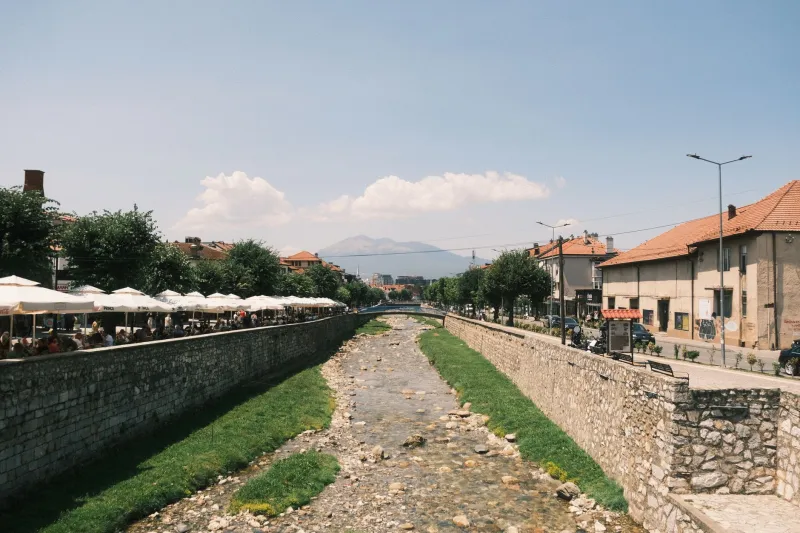
- Day 3–4, Prizren: Bus from Pristina ($5). Wander the cobblestone old town, cross the stone bridge over the Bistrica, climb to Kalaja Fortress at sunset (free). Lunch of qofte and salad ($6). Guesthouse ($25). Daily total: roughly $40.
- Day 5, Peja and the Rugova Gorge: Bus ($6), a day among some of Europe's most dramatic canyon walls, hiking trails that cost nothing but effort. Dinner ($8). Daily total: roughly $40.
- Day 6, Gadime Cave or the Novo Brdo fortress ruins: Local transport ($5), entry fees under $3, a long unhurried lunch ($8). Daily total: roughly $35.
- Day 7, return to Pristina, museums and a farewell dinner: ($45).
Add it up: approximately $300 for a week — before international airfare, which is where the real savings end. Everything on the ground, from the fortress walls to the hospitality, costs the same as it always has: nothing.
Where the Savings Go
The point is not merely thrift. A budget that stretches this far changes the shape of a trip. It buys a second night in Prizren you hadn't planned. It funds a guided hike, a taxi to a remote monastery, an extra round of coffees with a new friend. American travelers accustomed to rationing their European experiences will find that in Kosovo, the constraint isn't money — it's time.
And unlike the bargain destinations of decades past, low cost here does not signal low quality. The guesthouses are spotless, the food is honest and abundant, and the cultural depth — Ottoman bridges, Byzantine frescoes, Illyrian ruins, a capital full of energy — rivals anywhere on the continent.
Practical Notes
The euro is the official currency, which simplifies budgeting for American visitors. ATMs are widespread in cities. Cards are accepted in urban establishments, though carrying cash is wise in villages. Tipping is appreciated but modest — rounding up the bill is entirely sufficient.
Kosovo will not remain this affordable forever. Tourism is growing, investment is arriving, and prices will eventually find their European level. For now, though, the heart of the Balkans remains the continent's most generous invitation: a place where fifty dollars a day doesn't limit your journey, but defines its abundance.